



Friday September 12, 2025 | NEW WESTMINSTER, BC [Posted at 12:50 pm]
Editorial analysis by Mary P Brooke | Island Social Trends
“When children learn to read they unlock a world of imagination, of confidence, of opportunity.” said Education and Child Care Minister Lisa Beare as she launched Mandatory Early Literacy Screening for the K-12 public education system today.
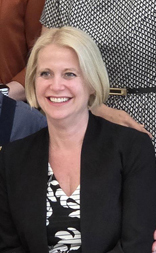
Beare made the announcement in New Westminster along with Labour Minister Jennifer Whiteside, MP for New Westminster-Coquitlam who began work on the program in her previous portfolio as Minister of Education.
Beginning this school year (2025-2026), Kindergarten students in B.C. will be screened to determine where they are in their development of reading skills, i.e. ‘briefed for literacy’, as was stated in the live announcement today. That will be expanded to Grades 1 through 3 starting next year (2026-2027).

“it’s a social determinant of health to have kids develop reading skills early,” said Jennifer Whiteside.
“Literacy is the foundation upon which all learning is built,” said Sandra Singh, director of instruction, learning and innovation, New Westminster Schools.

Funding:
In April 2024, the B.C. government pledged $30 million over three years to support literacy initiatives to improve literacy for all children, including children with learning differences, such as dyslexia.
Lobbying from the dyslexia support community was a large part of introducing this test. They want children to “stay on track with learning to read with an effective, efficient, evidence-based practice”, it was stated today.

Use in schools:
School districts will use screening tools that align with the criteria set by the Ministry of Education and Child Care.
“The ministry will be working with school districts, literacy experts, researchers and education partners to plan a standardized approach to screening for students from kindergarten to third grade in the coming years. This will include a single, made-in-B.C. screening tool for all schools to use,” it was stated in a news release that followed the announcement.

Live test analysis:
“These screening tools are brief and quick and easy to use,” said Beare.
The test is standardized and no one falls between the cracks, it was stated in today’s government announcement.
A live demo of the one-minute test was done during the media call. The might seem simple but words could easily be interpreted differently by different listeners without necessarily indicating a ‘problem’. There is also some reliance on the skill and expectations of the person delivering the test.
Few people think in syllables; it would be easy to stumble over the first few words in the test.
It seems like a lot of weight to put on one short test as a ‘baseline’ — especially given the variation in skills of the person delivering the test, and the brain-based complexities of dyslexia.
That one quick test will be used to activate further supports.
Notably, different cultures hear and produce linguistic sounds differently (hence what we might call ‘accents’ when speaking in English).
About dyslexia:
Dyslexia is brain-based problem in decoding of written language. According to the Reading Well organization, dyslexia is genetic and hereditary— if a parent who has it there is apparently a 50% chance that the child will have it.

Brain regions dyslexics are using to read are not very good at processing phonemes—the basic sounds of language. The individual sounds become “sticky”, unable to be broken apart and manipulated easily. This is known as the phonological processing impairment theory.
How much an education program can adjust for what is a baseline brain scenario is perhaps ambitious. But it is the BC government’s approach to education to include everyone and give everyone their best chance at success
BC is recognizing literacy as a key skill for success in life. Over the past couple of decades the BC education approach has leaned heavily to social-emotional learning, but seems to be finding its way back to emphasizing ‘reading, writing and arithmetic’ (3R) skills as a baseline for communication, critical thinking, and being equipped for social interaction.

===== RELATED:
- About the writer: Mary P Brooke has been a socioeconomic issues analyst in BC since 2008. As an active BC news journalist since 2011, Ms Brooke has followed BC education issues including attended SD62 school board meetings in person 2014-2024. She ran as a school trustee candidate in SD62 (west shore of Greater Victoria) in 2022. Her four now-adult children attended BC public schools in SD61, SD62 and SD79 spanning 1990 to 2015). Mary P Brooke was awarded a King Charles III Coronation Medal in 2025 for her commitment to professional journalism and supporting her community with local journalism.
- NEWS SECTIONS: K-12 EDUCATION | EARLY CHILDHOOD, PRESCHOOL & CHILD CARE