


Wednesday June 10, 2026 | Posted at 5 pm PT
by Mary P Brooke | Island Social Trends
The Safe Social Media Act (SSMA) Bill C-34 has been released by the federal government.
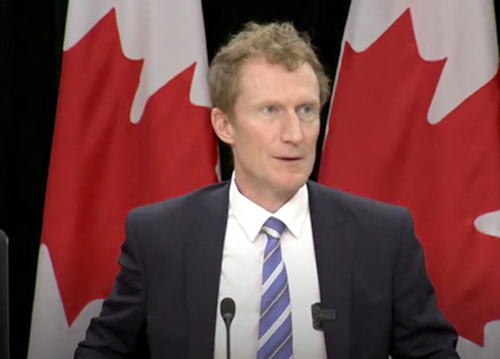
The announcement was made by Canadian Identity and Culture Minister Marc Miller today in Ottawa.
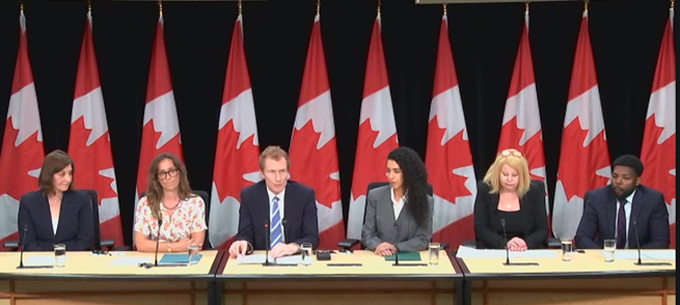
The Safe Social Media Act is intended to regulate social media services and chat bot services.
“It is not a partisan issue but a responsibility that we all share,” said Rachel Bendayan, Parliamentary Secretary to the Prime Minister.
The legislation will enact two new Acts: The Digital Safety Act and the Digital Safety Commission of Canada Act.
The bill introduces a framework to improve online safety, ensures that digital services are transparent and accountable for the risks their services create, and creates a new Digital Safety Commission of Canada to enforce the Digital Safety Act and support victims of online harms.
The consensus at the press conference was that all parties should be able to support the bill, as it aims to protect children and hold tech companies responsible to provide safe designs of their platforms.

Children need to be safe online:
“We’re failing our children, enough is enough. Our parents cannot face these challenges alone. The safety of children cannot be an afterthought,” said Miller today.
Children need to be safe on platforms they use every day. The minimum age of 16 to have a social media account.
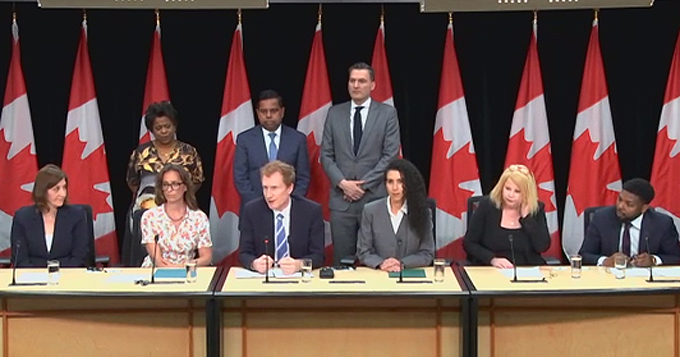
There were also three other Ministers behind Miller at the press conference to represent the scope and intent of the new social media and chat bot safety measure and obligations on tech companies: Evan Solomon (AI and Digital Innovation), Marjorie Michel (Health), and Gary Anandasangaree (Public Safety).
Dealing with big tech companies:
A representative from the organization called CyberTip.ca today said that “kids are in crisis, families are unravelling”. She added that “parents aren’t failing, they are outmatched”.
Clearly the big social media tech companies are putting profits before safety.
CyberTip now gets about 20,000 removal notices per day from around the Internet. “We can’t appreciate the scale,” she said as to the extent of the problem, and added that “organized crime networks have access to our children in their homes”.
Tech companies have, until now, essentially been let off the hook. But that changes with today’s Bill C-34.

Three core duties:
Under this legislation social media platforms and chat bots will have to meet three core duties: to protect children, to act responsibly, and for social media sites to make certain content inaccessible.
Sites will be obligated to place age restrictions on accounts for children under the age of 16.
The new regulations will be enforced by a new digital safety commission.

Seven categories of harmful content:
There are seven categories of harmful content:
- Content that sexually victimizes a child or re-victimizes a survivor.
- Content that induces a child to harm themselves.
- Content used to bully a child.
- Content that foments hatred.
- Content that incites violence.
- Terrorism or violent extremism content.
- Intimate content communicated without consent.

Age-appropriate design:
Today the government outlined the expectations of age-appropriate design of social media platforms.
Platforms are to put child safety first when designing products and features.
That will include taking measures to reduce children’s exposure to certain content and high risk interactions as well as an obligation to prevent children from accessing pornographic content.
Examples of how to do that would include: Addictive design mitigation, content warning labels, and safe search settings for children.

Age restrictions on social media services:
Social media services will have an obligation to implement an age restriction on accounts for children under 16 years of age.
Social media services could seek an exemption from the age restriction on accounts if they have have implemented sufficient safeguards for children.
That exemption will not be made available to adult content services.

No-brainer:
“It’s a no-brainer. These things shouldn’t be up there. They should be taken down within 24 hours. The very fact that they’re up causes people to self harm and (be exposed to) bullying,” said Minister Miller today about the “most aggregeous” of the content that is harmful to children online.
When children die by suicide it revictimizes families, Miller gave as an example of enduring harms that “gets shared forever”.
Miller several times today in the press conference and in TV interviews described the most offensive content as “crap” that should be taken down.
Platforms will be responsible to take proper and adequate measures to reduce the exposure of kids in particular, but everyone, to that type of harm.
‘Safety by design requirements’ was mentioned several times by Miller today. No law will be perfect or catch everything, but the expectation is that proper design for children’s safety should take care of many possible negative occurrences.

Digital Safety Commission:
A new Digital Safety Commission of Canada to administer the framework and to help foster a culture of online safety in Canada. That will take about 18 months to set up, said Minister Miller.
However, in the meantime, as soon as the Act is passed into law, the social media and chat bot platforms will need to be compliant with the law.
Miller said today that the big tech companies should “see where the puck is heading” and plan accordingly with changes to their platforms.
The Digital Safety Commission will:
- Set new standards for online safety by conducting research on global best practices, assessing regulated services’ Digital Safety Plans, providing guidance to services on how to mitigate risk, and developing educational resources for the public.
- Enforce legislative and regulatory obligations and hold regulated services accountable for their responsibilities through reporting, auditing for compliance, issuing compliance orders, and penalizing services that fail to comply.
- Collect, triage and administer complaints from users about content that falls within the Duty to Make Certain Content Inaccessible when complaint responses from the social media service are insufficient.

===== RELATED:
NEWS SECTIONS: SOCIAL MEDIA | DIGITAL TECH | CHILDREN & CHILD CARE | AGE & GENERATIONS | FAMILY & SOCIETY