


Friday February 6, 2026 | VICTORIA, BC
Political economic analysis by Mary P Brooke | Island Social Trends
Sector tariffs and trade diversification has shone a light on the auto-making sector this week.
While that sector is not directly applicable to most businesses in British Columbia, there is a federal reskilling theme worth noting.
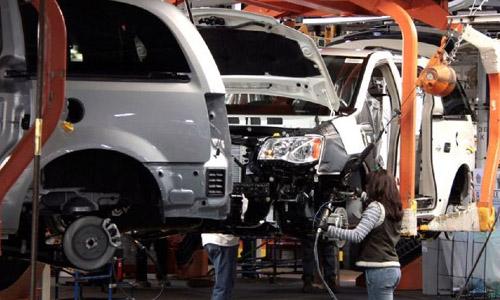
It’s about ‘briding to the future”, which will likely apply in almost every business sector in this decade as a result of rapidly changing digital technologies including artificial intelligence (AI).

Auto-making sector:
To protect Canadian auto workers and businesses in that sector from immediate pressures while helping them bridge them to the future, Prime Minister Mark Carney on February 5 announced a series of measures for manufacturing, jobs and product sales.
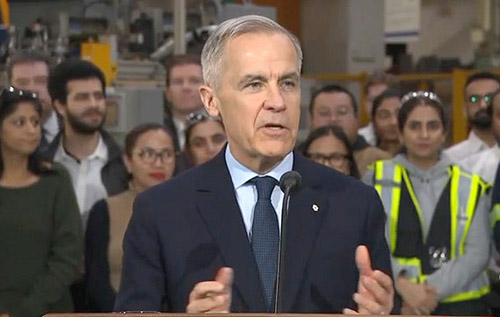
Carney announced that the federal Liberal government will:
- Provide support to employees through a new Work-Sharing grant – preventing layoffs and supporting worker retention so businesses can plan for the future.
- Establish a new workforce alliance of industry, labour, and training partners to address bottlenecks and catalyse private investment.
- Provide employment assistance and reskilling supports for up to 66,000 workers across Canada, including for displaced auto workers, with a $570 million investment.
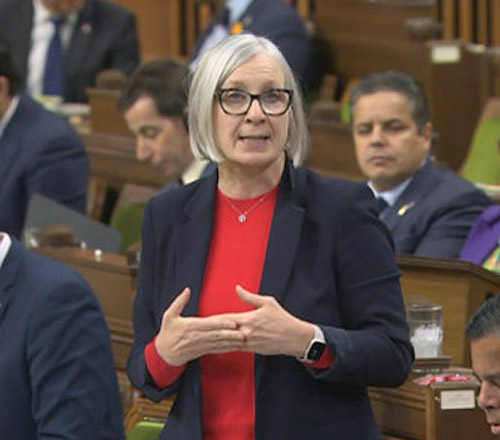
“Canadian auto workers are among the best in the world. Their expertise is our competitive advantage,” said Patty Hajdu, Minister of Jobs and Families and Minister responsible for the Federal Economic Development Agency for Northern Ontario this week.
“This strategy is about backing those workers with the training, investment, and certainty they need to build the future of the auto sector in Canada. By investing in people, we are securing good jobs, growing our economy, and making sure Canada remains a global leader in automotive manufacturing,” said Hajdu as part of the February 5 EV sector announcement.

Transferable skills while transitioning the economy:
Those strategies are transferable to other industrial, manufacturing and business sectors. It would be unsurprising to see this approach to, say, Canada Post where some employees can be reskilled while the operational side of the business shifts to the future.
This has already been done in the steel sector in Ontario, where last fall Algoma Steel accepted a $500 million government-backed loan ($400 million federal, $100 million provincial) upon agreeing to pivot their production to new areas of need in the economy (e.g. beams instead of coils).

There were some job losses at that plant near year-end, but in turn a restructured plant with new expandable markets will produce relevant employment in the future as well as serving the ‘buy Canadian’ needs and other sectors in this country’s economy.

Macro-management:
This is one example of how Prime Minister Mark Carney’s macro-economic leadership is helping to reshape this country’s economy in a way that provides more stable product lines, new jobs, and a diversified market both domestic and for export.
===== RELATED:
- Dropping EV mandate & funding more charging stations to boost EV sales (February 5, 2026)
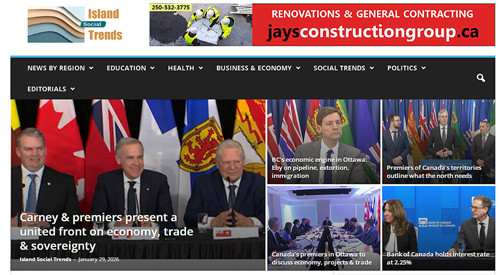
- Carney & premiers present a united front on economy, trade & sovereignty (January 29, 2026)
- Canada Post submits their transformation plan to government (November 11, 2025)
- NEWS SECTIONS: 45th PARLIAMENT of CANADA | TRADE DIVERSIFICATION | TARIFFS & TRADE | JOBS & EMPLOYMENT | CANADA-NATIONAL | BUSINESS & ECONOMY
- GET the ISLAND SOCIAL TRENDS PREMIUM ENEWS [Individual | Small Teams | Corporate]