


Monday September 29, 2025 | VICTORIA, BC
by Mary P Brooke | Island Social Trends
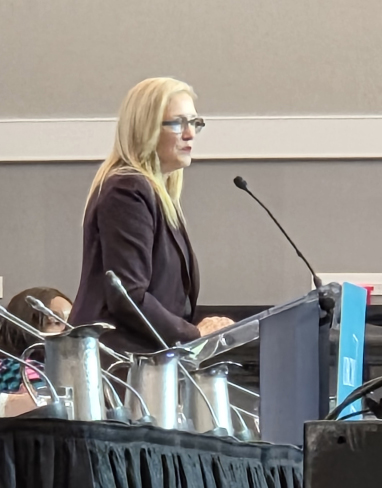
During the Union of BC Municipalities (UBCM) convention in Victoria last week, BC Finance Minister Brenda Bailey heard from many municipalities in one-on-one meetings.

“Their input is important as the Province prepares for next year’s budget, ensuring the dollars we spend have the most impact for British Columbians,” it was stated by the Ministry of Finance last week.

Several hundred meetings were held with mayors, councillors and senior staff of municipalities during the September 22 to 26 convention.
The topics of discussion would have be as varied as are the departments of government and the needs of municipalities — including housing, health care support, public safety and policing, infrastructure, transportation, climate readiness, and more.

The ease and depth of meetings was facilitated by holding UBCM in the capital city with greater access to ministry staff as well as the ministers themselves.
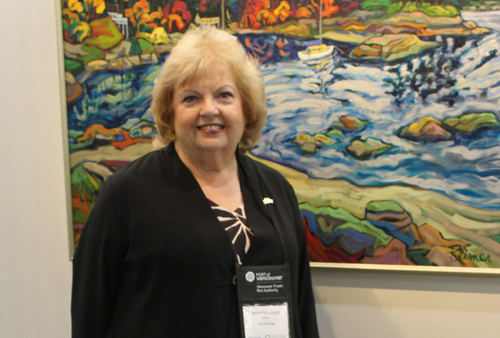
Surrey Mayor Brenda Locke is concerned about policing and also the slow pace at which schools are being built for students in the fastest growing city on BC’s mainland.
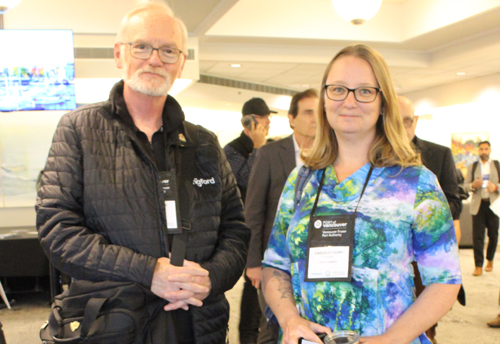
Most municipalities had housing affordability and supply at the top of their list. A resolution about Housing as a Human Right was passed during the convention with strong support.

Many municipal leaders are concerned about the ‘downloading’ of the costs of provincial responsibilities onto municipalities including health-care, mental health and addictions, and homelessness.

Tax and spending review:
As part of the annual budget process, the Ministry reviews all taxes and programs, ensuring that they are making strategic decisions that support economic growth for a more prosperous British Columbia for everyone.
During an Economic Review plenary session at UBCM on Tuesday last week, one of the economists on the panel suggested that dropping the provincial sales tax (PST) from all retail purchases made in BC would help energize the BC economy.
Presumably an economic boost would results from the so-called trickle-down effect of having more money for businesses to spend on investment and for consumers to spend less disposable income on household purchases.

PST brings in 13% of the Province’s total revenue, approximately $11 billion. (See table 1.4 of the 2025 Budget and Fiscal Plan). The current provincial deficit is $11.6 billion, so dropping PST would double the deficit, so it’s unclear how wise a move that would be.
This year all government departments have been asked to find efficiencies, i.e. areas of spending that can be cut back.
Already about 850 employees have recently lost their jobs as part of spending reviews, said Premier David Eby last week.

Credit rating:
During last week’s Road Ahead for BC’s Economy session at UBCM, one of the economists on the panel said that the downgrading of BC’s ranking with major credit-rating agenciesshould worry people.
Meanwhile, according to the Ministry of Finance, BC remains one of the highest rated Canadian provinces by the four major credit rating agencies, with strong access to global capital markets and borrowing costs which are very competitive compared to other provinces.
===== RELATED:
- UBCM 2025: Premier David Eby addresses municipal leaders on community safety, economic challenges (September 27, 2025)
- Strong future for BC economy through investment & innovation says finance minister (September 24, 2025)
- BC shows $665 million deficit increase in first quarter 2025 (September 15, 2025)
- NEWS SECTIONS: BC 43rd PARLIAMENT | BUSINESS & ECONOMY | UBCM | BUDGET 2026