


Monday October 20, 2025 | VICTORIA, BC
by Mary P Brooke | Island Social Trends
The BC Government is launching what they call a bold set of actions designed to drive investment in major projects that will grow the economy, diversify markets and create new jobs — as a way to enable province- and nation-building industrial projects that will unlock the full economic potential of northern B.C.
The over-arching intention is to provide enough electricity to support major nation-building projects (with a focus on mining and natural resources) which includes restricting high-energy demands from sectors like cryptocurrency that don’t provide a lot of jobs. Regulations and directives related to the allocation of electricity for industrial projects in British Columbia will be implemented in November 2025, and a competitive process to access electricity for data centres and AI will be launched by BC Hydro in January 2026.
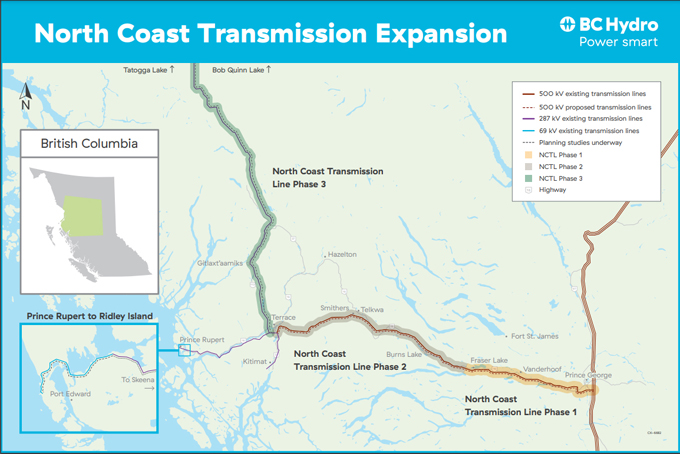
A significant step toward the energy expansion goal is expansion of the North Coast Transmission Line.
The province is attempting to address unprecedented demand for electricity due to industrial growth as well as population growth while ensuring that B.C. and Canadian economic interests are reflected in the allocation of British Columbia’s growing clean-electricity supply.
The growth of emerging industries including data centres, AI, and hydrogen for export will continue to be enabled.

Legislative changes:
Legislative amendments will expedite the construction of the North Coast Transmission Line, one of 18 priority projects identified by the Province as essential to expanding B.C.’s electricity grid, diversifying the provincial economy and supporting the development of new mines, LNG facilities and port expansions.
The 18 major projects identified include mines, renewable energy such as wind and solar, and natural gas that can be accelerated through government action.
Broad-scope approach:
Balance will be achieved through negotiations with prospective in a way that lifts everybody up, not just the next project that happens to come along. A broad range of goals will be kept in mind including jobs, clean energy, environmental impacts and contributing to the province’s economic growth.

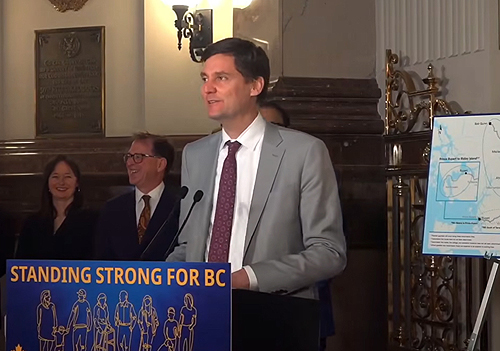
The new approach is “responsive and reflective” including lifting communities out of poverty, said Eby today in a the media availability that held in the rotunda at the BC Legislature.
“To my mind, this is in the public interest,” Eby told media today, saying entire communities will be lifted out of poverty, that 10,000 jobs will be created. The new legislative direction and advancing the NCTL as a “significant factor for development of a big revenue machine”.
Sovereignty and national defence are broad considerations as well.
Who addressed media:
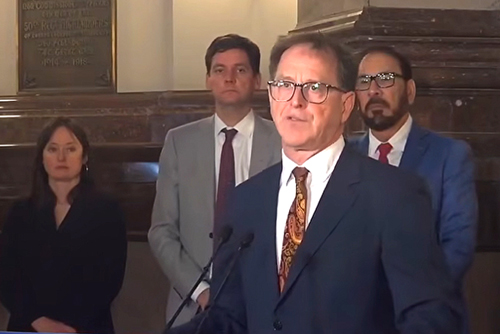
Today’s announcement to media was led by Premier David Eby, Minister of Energy and Climate Solutions Adrian Dix, and two energy sector partners (from the First Nations Major Projects Coalition and the Mining Association of BC).
BC Hydro’s CEO was not part of the announcement today, which means the government is taking the lead here.
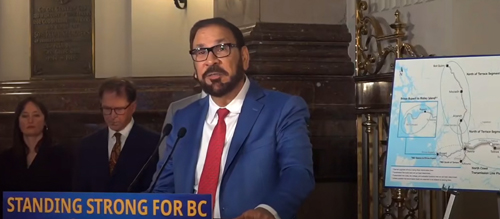
The event was emceed by Mining and Critical Minerals Minister Jagrup Brar who noted that BC has opened two mines this year.

BC as economic engine for the country:
Minister Dix said today that the NCTL and actions taken by government with this legislation “puts the economic development of the province to the forefront when we absolutely need to do that”.
He pointed out that the NDP government “made a decision in 2023 to pursue this” including that the NCTL was established as a priority in the BC Hydro capital plan in 2024.
“The intention is to move quickly,” said Dix, hence the legislation now in 2025. He expects to see “shovels in the ground” starting in 2026. Completion would be expected in 2034.
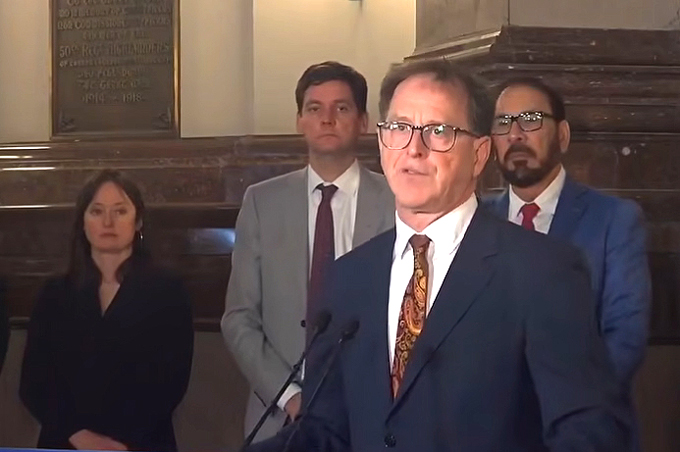
“B.C. will be the economic engine that drives a more independent Canadian economy – powered by clean energy, built through partnership with First Nations and driven by the hard work of British Columbians,” said Premier David Eby.
“We’re doing this in a way that future generations will be proud of,” said Eby today.
The premier pointed out that this progress in BC comes at a time of “great economic uncertainty and instability”, by which BC can lead the Canadian economy.
“This legislation will help us move faster on the North Coast Transmission Line, a nation-building project that will deliver clean electricity to responsibly power industrial growth and job creation to increase prosperity for families, communities, our province and our country.”

here is a shortage in global copper – prices are starting to rise not withstanding global tensions, said Mining Association of BC CEO Michael Goehring. He said the BC Government is showing foresight as to the needs of the mining and critical mineral sector.
Key sectors:
There are significant opportunities in British Columbia’s traditional natural resource sectors, including mining, natural gas and LNG, and in emerging sectors, such as data centres and artificial intelligence (AI).
The success of proposed major projects hinges on access to reliable, clean electricity at a competitive industrial rate.
Impact on BC Hydro ratepayers:
Other jurisdictions have been challenged to address electricity demands from emerging sectors and, in many cases, have placed significant rate increases on the backs of ratepayers.
“B.C. is taking a unique and proactive approach to avoid the missteps seen in other jurisdictions and to establish a publicly owned electricity system as the backbone of a growing economy,” it was stated in the Ministry of Energy and Climate Solutions news release today.

Economic diversification:
“We must act with urgency to leverage our clean-electricity advantage and grow and diversify our economy,” said Adrian Dix, Minister of Energy and Climate Solutions.
“Our new allocation framework will prioritize vital growth in sectors like mining, natural gas and lowest-emission LNG, while ensuring our clean energy is directed to projects that deliver the greatest benefit to British Columbians. We’re taking action to build the North Coast Transmission Line as fast as possible to accelerate the development and construction of major industrial projects and bring good, well-paying jobs to people in B.C.”

Energy statutes:
The energy statutes amendment act, tabled in the legislature today October 20, 2025 would:
- expedite the construction of the North Coast Transmission Line (NCTL) in partnership with First Nations, advancing economic growth and reconciliation;
- ensure electricity is available for sectors that produce jobs, generate public revenues, and have the greatest opportunity to decarbonize, including mining, upstream natural gas, LNG and manufacturing; and
- enable a process for emerging sectors such as data centres, AI and hydrogen to grow in a manner that results in the greatest benefit to people in British Columbia and the economy.
Government will also implement several regulatory and policy changes in fall 2025 that will:
- accelerate the timelines for the development and construction of the NCTL, and provide cost certainty for large industrial customers seeking to access clean power from the line;
- address growing demand for electricity from emerging sectors by enabling energy connections and growth by putting limits on the power available for data centres and AI, and enabling hydrogen production for export, prioritizing the most beneficial projects from these, with engagement on regulatory changes to begin in fall 2025; and,
- permanently ban new BC Hydro connections to the electricity grid for cryptocurrency mining to preserve the province’s electricity supply and avoid the overburdening of the electricity grid.
North Coast Transmission Line:
Legislative amendments will expedite the construction of the North Coast Transmission Line, one of 18 priority projects identified by the Province as essential to expanding B.C.’s electricity grid, diversifying the provincial economy and supporting the development of new mines, LNG facilities and port expansions. The 18 major projects identified include mines, renewable energy such as wind and solar, and natural gas that can be accelerated through government action.
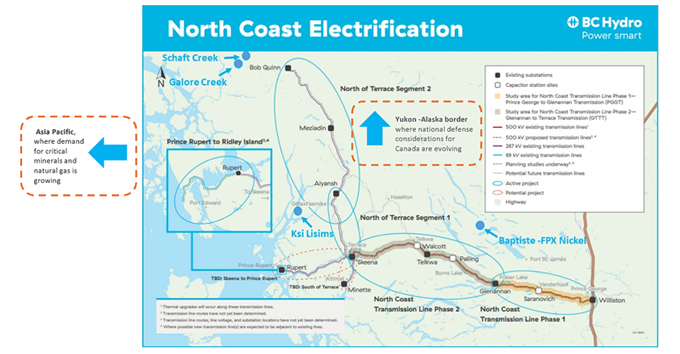
Twinning the existing line from Prince George to Terrace and out to Bob Quinn Lake will unlock tens of billions of dollars in real, shovel-ready industrial projects across northwestern B.C., including the north coast. Once operational, the NCTL project is expected to create approximately 9,700 direct full-time jobs, contribute nearly $10 billion per year to GDP and generate approximately $950 million annually in public revenues for the province and municipal governments. Additionally, it will help prevent two to three million tonnes of carbon emissions annually, supporting B.C.’s climate goals while powering economic growth.
The next major steps for the NCTL project will be finalizing the details of the route and initiating select construction permitting. Construction is expected to start in summer 2026, with phased-in completion of the project targeted for 2032-34.
Regulations and directives related to the allocation of electricity for industrial projects in British Columbia will be implemented in November 2025, and a competitive process to access electricity for data centres and AI will be launched by BC Hydro in January 2026.

NCTL development in three phases:
- Phase 1 will run from Prince George to Fraser Lake (about 164 kilometres).
- Phase 2 will run from Fraser Lake to Terrace (about 275 kilometres).
- Phase 3 includes new transmission infrastructure north of Terrace to Aiyanish and Bob Quinn Lake (about 350 kilometres). Planning is underway for additional improvements to connect customers located beyond Terrace.
Call for projects in 2026:
BC Hydro will launch a competitive call for projects in early 2026 for a two-year period that allocates 300 megawatts (MW) for AI, 100 MW for data centres, and amounts for hydrogen exports that will be set at a later time, as market conditions warrant.

===== RELATED:
NEWS SECTIONS: ENERGY | BC HYDRO | ELECTRICITY & CLEAN ENERGY | 43rd PARLIAMENT of BC | MINING & CRITICAL MINERALS | ARTIFICIAL INTELLIGENCE | DIGITAL TECH