


Tuesday April 21, 2026 | OTTAWA, ON [Posted 8 am PT | Updated 8:18 am]
by Mary P Brooke | Island Social Trends
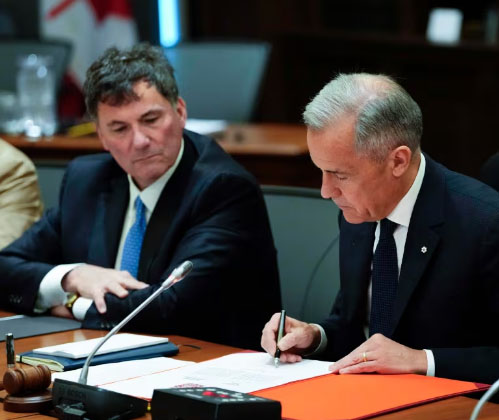
Prime Minister Mark Carney has a new Advisory Committee on Canada-U.S. Economic Relations and the work begins fast.
The first meeting will be held just six days from now, on April 27.
As Canada’s government continues to forge a new economic and security relationship with the United States, Carney is clearly seeking economic guidance from a range of appointees who bring specific sector expertise, several also with deep political roots.
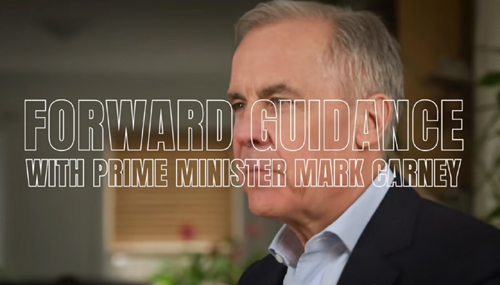
The timing of this announcement now puts Carney’s generalized announcement about the economy last weekend into perspective — his 10-minute fireside-chat style video posted in social media on April 19 contained nothing new for those who follow politics and government but perhaps served to bring the average Canadian up to speed. And now the CUSMA ramp-up is outlined within the composition of this new advisory committee.
CUSMA work:
This comes as Canada heads into deeper territory of reviewing and essentially re-negotiating the current Canada-US-Mexico (CUSMA) trade agreement. A present, 85% of Canada’s trade with the United States remains tariff-free, the lowest average tariff rate in the world.

Prime Minister Mark Carney’s news release today describes that as Canada having “secured the best deal of any major U.S. trading partner”, though that is essentially a carry-over from the work of Trudeau’s government under which CUSMA was negotiated twice.
The CUSMA entered into force on July 1, 2020, for 16 years (until 2036).
CUSMA timeline:
The current CUSMA agreement includes a commitment to review the Agreement on the sixth anniversary of its coming-into-force, which is July 1, 2026.
At this point, the countries can decide by consensus on any appropriate actions and whether to extend the CUSMA’s term for another 16 years.
Should there be no consensus to extend the CUSMA’s term in 2026, joint reviews would be held annually until the parties agree to an extension or until the agreement expires in 2036.
The agreement included a commitment to review the Agreement on the sixth anniversary of its coming-into-force, which is July 1, 2026.
Should there be no consensus to extend the CUSMA’s term in 2026, joint reviews would be held annually until the parties agree to an extension or until the agreement expires in 2036.

Maintaining Canadian advantage:
As Canada approaches the Joint Review of the Canada-United States-Mexico Agreement (CUSMA), our aim is to preserve that unique Canadian advantage and to build on it,” Carney states today as part of announcing the new advisory committee.
Committee vs council:
Carney has appointed a committee whereas Trudeau had a council.
A committee implies more of a working group that feeds their input on an assigned task to a higher level for action.
A council implies more of a think-tank, possibly with more autonomy but less of a direct role on execution.

Committee role and chair:
The new Advisory Committee on Canada-U.S. Economic Relations is to serve as a forum for expertise and strategy on all aspects of the Canada-U.S. economic relationship.
The new committee includes leaders from major sectors of the Canadian economy, representing extensive experience in business, investment, trade, and labour.
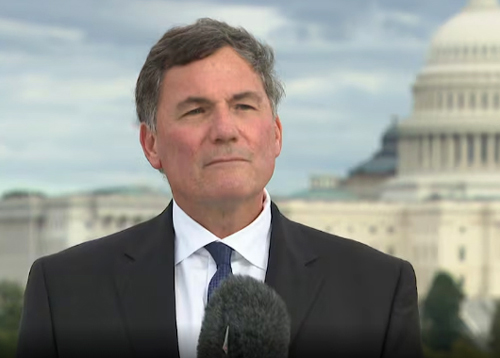
Dominic LeBlanc wiil chair the committee. A career-long Liberal and a right-hand person to both the previous prime minister and the leading phase of trade negotiations with the United States over the past year under Carney, LeBlanc brings stability and gravitas to the process of going head to head with Canada’s largest trading partner at arguably one of the most critical junctures for Canada’s economy and sovereignty.
LeBlanc is the President of the King’s Privy Council for Canada and Minister responsible for Canada-U.S. Trade, Intergovernmental Affairs, Internal Trade and One Canadian Economy, Dominic LeBlanc.

Members of the committee:
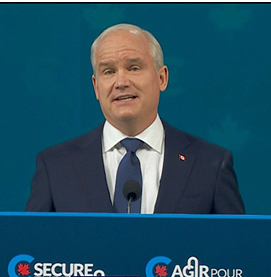
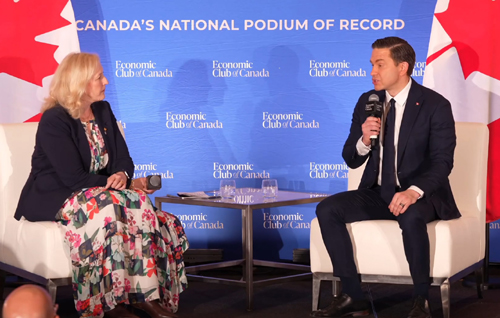
The membership of the new Advisory Committee on Canada-U.S. Economic Relation includes some previously high-profile Conservative politicians (including former Conservative Party Leader Erin O’Toole and former Deputy Leader of the Conservative Party Lisa Raitt). If nothing else, these appointments make it much harder for current Conservative Leader Pierre Poilievre to be critical.
Two key industry leaders whose sectors have been impacted by the US trade war carry forward from the previous advisory council, notably Flavio Volpe (auto parts sector) and Lana Payne (president of UNIFOR, the largest private sector union).
This shows a strong emphasis on reconstructing one key industry (in which the steel and aluminum sectors play a huge role) and also the work of restructuring the employment sector in a way that presumably sustains much of the current unionized workforce.

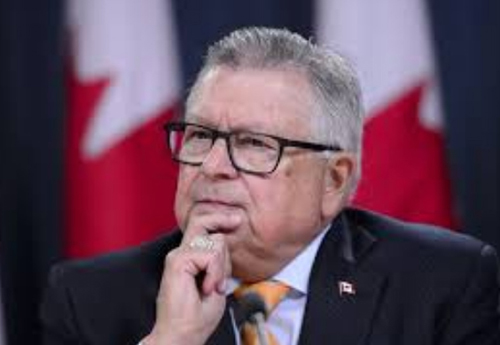
Three key political figures are on the new committee: former Quebec Premier Jean Charest who is no doubt expected to provide background on Quebec issues with an economic perspective; Ralph Goodale, most recently Canada’s high commissioner to the UK but a Liberal who is politically rooted in Saskatchewan where agriculture and potash production are key; and P.J. Akeeagok who until recently was the Premier of Nunavut as it’s clear that the Arctic region of this country faces enormous challenges for growth as well as Canada’s sovereign protection.


“Canada is strongest when governments, workers, businesses, and industry leaders pull in the same direction,” said LeBlanc in today’s news release.
Most of the rest of the list of 24 is comprised of CEOs or leaders with expertise in specific areas of business or economy. Here is the full list (in the order as presented in today’s PMO news release):
- Jean Simard
- Candace Laing
- Darryl White
- Lisa Raitt
- Tracy Robinson
- Flavio Volpe
- Ron Bedard
- Ken Seitz
- Dennis Darby
- Lana Payne
- François Poirier
- Émile Cordeau
- Luc Thériault
- Magali Picard
- Jonathan Price
- Susan Yurkovich
- Michael Harvey
- Tabatha Bull
- Cameron Bailey
- Valérie Beaudoin
- Erin O’Toole
- Jean Charest
- P.J. Akeeagok
- Ralph Goodale
Notably, Jonathan Price (President and Chief Executive Officer of Teck resources Limited) brings the resource sector into focus on the new committee. The forestry sector is also represented as well as banking.
Tabatha Bull President and CEO of Canadian Council for Indigenous Business clearly brings the Indigenous component into focus.
Cameron Bailey (CEO of the Toronto International Film Festival) brings the arts component to the mix.

Trade scope:
Together, Canada, Mexico, and the U.S. represent a market of 517 million consumers, with a combined GDP of $48.8 trillion.
Canada and the U.S. exchanged nearly $3.6 billion in goods and services every day in 2024.
Since the CUSMA entered into force, Canada-U.S. trade has increased by more than 27% or $196 billion.

===== RELATED:
NEWS SECTIONS: CANADA-USA | CANADA-NATIONAL | 45th PARLIAMENT OF CANADA