



Thursday March 12, 2026 | VICTORIA, BC
News analysis by Mary P Brooke | Island Social Trends
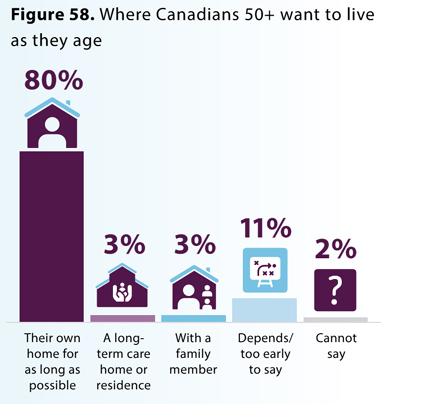
Most Canadians over the age of 50 want to remain in their own homes and communities for as long as possible as they age.
This desire to ‘age in place’ will be a crucial part of caring for Canada’s aging population.
Providing the right systems and services to allow for aging in the ‘right place ‘(where people are best supported and healthiest) requires responsive systems and services.
Recent survey:
These findings are part of a recently released report called Perspectives on Growing Older in Canada: The 2024 NIA Ageing in Canada Survey as produced by the National Institute on Ageing which is based at Toronto Metropolitan University (TMU) in Toronto.
The survey process is now in its third year. For the 2024 survey, findings were drawn from “a representative sample” of nearly 6,000 Canadians age 50+.
This year’s report based on the 2024 findings highlights areas of stability and progress as well as ongoing challenges.
Those challenges are said to include persistent inequities and barriers, particularly for the most vulnerable populations.
The survey report also identifies actionable areas where targeted interventions and policy innovations can significantly improve quality of life.

There’s no place like home:
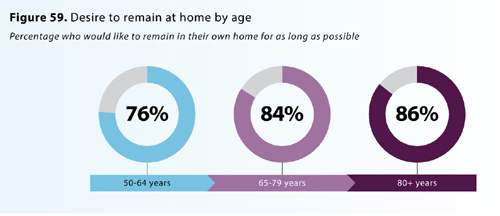
As people age, the more likely they are to want to age in place.
The higher the level of education of a person over age 50, the more likely they are to indicate the desire to age at home — perhaps by recognizing the benefits to health and lifestyle in one’s own home environment.

Meanwhile, a 2025 NIA ageing and loneliness survey shows that social isolation and loneliness rates (associated with living alone) remain high and have shown no improvement since 2022.
Health impact:
Surveys in 2022, 2023 and 2024 showed that the proportion of Canadians age 50+ who would prefer to remain in their own homes varies based on their health and financial situation.
People in better health are more likely to express a desire to remain in their homes compared to those who are in poor or fair health.

Cost of housing, cost of living:
The 2024 survey showed a distinct shift (in just one year from the 2023 survey) in the number of people age 50+ who are renting, up from 23% in 2023 to 30% in 2024.
This could reflect of the cost of home ownership and/or the cost of living overall that makes home ownership out of reach. It could also reflect lack of housing supply that is appropriate for ageing.

Role of municipalities:
Whether the housing market allows for aging at home is a significant component of the possibility to age in place.
While housing is a provincial responsibility in BC, municipalities are responsible for shaping the housing in their communities through their Official Community Plans and development permit processes.

Low demand for long-term care:
In 2024, only three percent of Canadians age 50+ said they would like to move into a long-term care home in the future as they age. Most(80%) of the respondents in that age group said they would like to remain in their homes for as long as they could.
About three years ago, BC’s Minister of Health said that most people in long-term care (about 86%) had some form of dementia.

===== RELATED:
NEWS SECTIONS: SENIORS | AGE & GENERATIONS | RENTING & TENANTS | POVERTY REDUCTION