

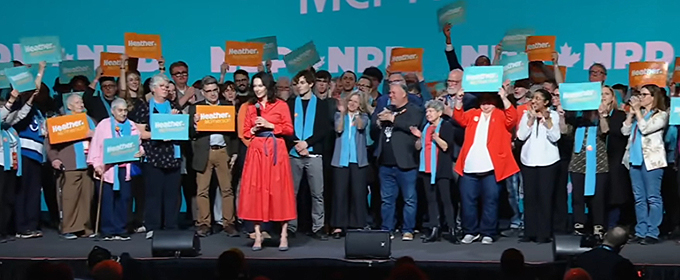

Saturday March 28, 2026 | WINNIPEG, MB
Editorial by Mary P Brooke | Island Social Trends
It looks like Heather McPherson, MP could win the federal NDP leadership race this weekend.
The presumed front runner is Avi Lewis, primarily in terms of fundraising, articulating about the cost of living crisis, and saying that trust needs to be restored to the constituency level. His campaign appeals to a particular type of strident voter. If he does not win on the first ballot it could put McPherson into the winning spot.
Or there could be a surprise result due to ranked ballot voting.
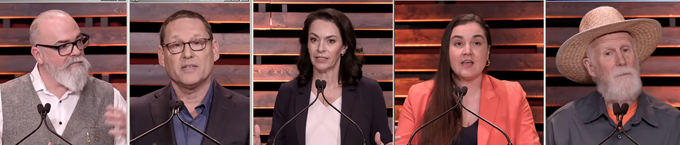
On the second round McPherson’s support could split among the three other contestants — each of whom have distinct campaign thrusts — all good but probably not enough: Rob Ashton for unionized workers, Tanille Johnston for Indigenous/rural and basic universal income, and Tony McQuail for climate action and food security.
If by an outcome of ranked ballot mechanics Ashton, Johnston or McQuail were to win, the party would end up with a relatively unknown and less politically-experienced leader.
McPherson first:
Here’s why McPherson is likely to emerge as the next leader of the federal NDP.

First thing, she is already in Parliament. She is the Member of Parliament for Edmonton Strathcona and would be back in the House of Commons on Monday morning with a stronger presence for the party.
She has a strong backing from established party leadership:
- McPherson was backed by former NDP Alberta Premier Rachel Notley and current MP Gord Johns (Courtenay-Alberni) on stage today during final speeches.
- Former Cowichan-Malahat-Langford NDP MP Alistair MacGregor (a widely well-regard parliamentarian 2015-2025) appears to be supportive of McPherson in social media today. In other words, putting more of the established team behind McPherson.
- Long-time federal NDP former MP Charlie Angus expressed his support to McPherson in a video about McPherson at the convention,
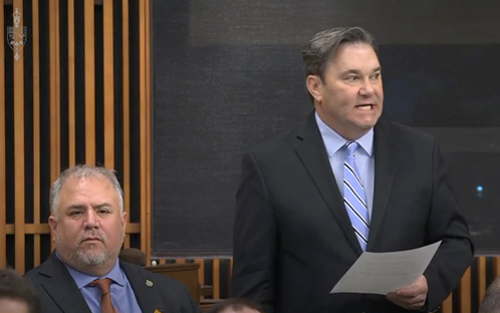
Don Davies has done a good job as interim leader but full leadership status counts in the world of parliamentary politics.
This political angle of running with what you have — rather than risking the moment on what you might get — has been supported this weekend at the convention.
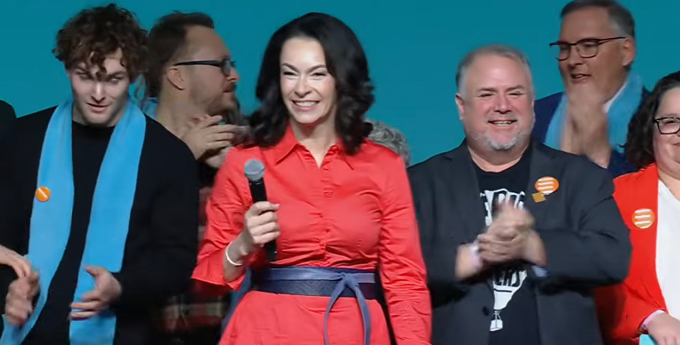
Having a sitting MP at the helm of the party reduces the gamble for an upcoming election. It brings the party one step closer to winning in a future election — not just for the party, but for the sake of all Canadians who aren’t part of the one percent wealth bracket.
“Working people are being squeezed from every direction” said McPherson in her speech to the delegates this weekend. “Now is not the time for us to shrink any more.”

Official party status:
A party needs 12 seats in the House of Commons in order to have official party status (which includes funding and seats on committees). Currently there are six NDP MPs.
In a sad way for the NDP, this point of being where the power is was demonstrated by the recent defection of one of their MPs over to the Liberals when Nunavut MP Lori Idlout crossed the floor to the Liberals earlier this month. That reduced the NDP’s caucus of elected seven MPs down to six.
The party may not wish to forget that the beating heart of the NDP has been on Vancouver Island for a long time. Prior to election 2025 there had been six of seven Vancouver Island seats held by NDP MPs almost entirely since 2011.

Three-party normalcy:
In the broadest sense, having an NDP Leader mid-election who already has a seat in the House of Commons would restore a sense of broad political normalcy.
Canada’s parliament has had the NDP as the third party in active fashion since the 1960s (while still noting the size of the Bloc Québécois caucus but their interest is openly not fully Canada-wide).
The left-leaning third party in Canada’s House of Commons and political discourse is a key differentiation for Canadian governance compared to the two-party system in the United States. The US two-party system continues to prove how divisive that is — not just for politics but the overall temperament of the country and possibly even playing into the angst and anger than fuels the wide use of guns in American society.
In Canada it feels normal to have the NDP in play within the political spectrum and active discourse. For that primary reason it puts party rebuilding at the forefront of the work of the next leader starting tomorrow (when leadership vote results will be announced).
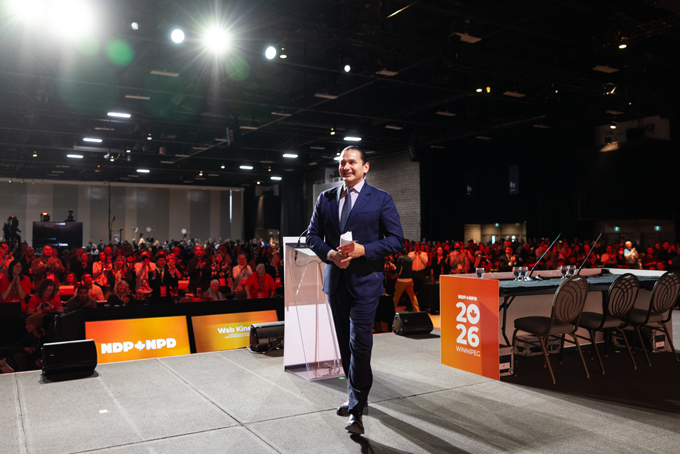
In his speech to NDP delegates yesterday, Manitoba Premier Wab Kinew proposed that the federal NDP guides or sets a framework for provincial NDP parties as well. That might be of a well-intended sentiment but it could rub elected NDP provincial premiers and party leaders with official opposition status the wrong way.
The new NDP leader will find themselves needing to balance this brewing reshaping of the NDP landscape.

Western elected woman:
McPherson told Island Social Trends back in November (at the BC NDP convention in Victoria) that she has a strong track record in bringing NDP votes to the ballot box, and that her riding is a strong core of the prairie NDP base.
The western regional presence is essential in the House of Commons for an effort toward balanced regional attention to key matters.
That further leads to a stance that Manitoba Premier Wab Kinew presented yesterday in his speech to convention delegates… that it matters to win in politics, not just play the game. Winning takes on-the-ground political skill — not just of the candidate but the team behind that leader. From among the leadership contestants at this juncture for the NDP, McPherson is the most proven for organizational results.

And in stating the obvious, having a woman leading the NDP might be a vote-catcher for some who are displeased with the current options leading the other major parties.
Having the party up and running with the strongest possible leader — who already knows and works within the system — is part of practical dynamics toward the next federal election.

Next federal election:
The timing of the next federal election is a topic of musing for political pundits in 2026.
But it’s clear that Liberal Prime Minister Mark Carney — a man of practical and strategic planning and action — would not gamble the status of his near-majority government (currently 170 out of 343 seats, two short of a majority) just to formalize a majority. He already essentially operates as if he has a majority, in terms of delivering policy and following that with dollars.
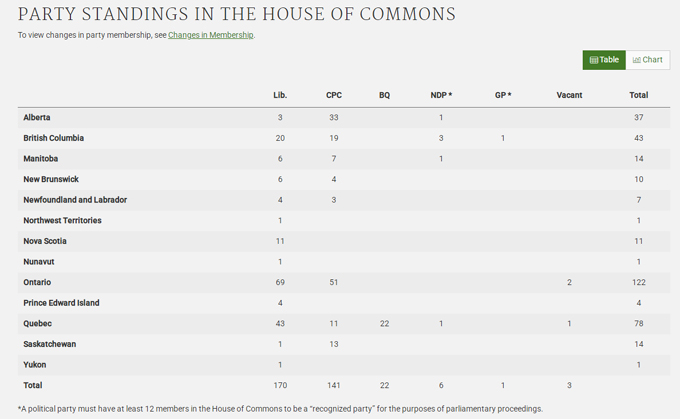
In fact, once the April 13 by-elections happen, the Carney Liberals may well have a full majority.
The Conservatives strategically may think they benefit by a strong NDP in the political landscape — at election time that presumably shaves off progressive votes from the Liberals to the NDP.
But the many long-time NDP voters who cast their vote for the Liberals in the April 2025 federal election were captured by the belief that Liberal Leader Mark Carney was the one who could best lead Canada through the chaos and onslaught of the Trump-led US trade war.
And they were probably right. Canada needs Carney. His economic experience and world-wide financial connections are what enables Canada to pivot on a (long) journey of trade diversification with many other parts of the world. Depending on where that mission stands by the time another federal election rolls around, Carney might well argue that the Liberals need to maintain a majority in order for economic success and protection of sovereignty to be best achieved if not maintained.
There’s no arguing with Premier Kinew’s remarks yesterday that the NDP’s focus is on “bettering the lives of everyday Canadians… that’s the mission at hand”.
“I have a plan, I have a record, and I’m already doing the work,” said McPherson today.
Failing in Election 2025:
The premise is that the NDP is the conscience of parliament.
Proof in the pudding … without the NDP pushing for child care expansion, launching a dental program and a national school food program, and producing the beginnings of national Pharmacare, none of those would be available to Canadians now.
Aside from any other political factors that may have been at play, it was by achieving those goals that former NDP Leader Jagmeet Singh likely met his political end in the April 2025 election.
As well, Singh’s campaign failure resulted from the campaign not bringing that message of social achievement to be front-facing in the 2025 election; the party defaulted to ‘who would be the next prime minister’ and seemed to suddenly promote its worker-roots after riding shotgun with the Liberals for three years (through the Supply and Confidence Agreement which was in effect from March 2022 to September 2024). All of that crafty work confused voters.
In Canada we don’t vote for the party leader we vote for members of parliament. The party strategy in Election 2025 could be said to have failed not only Singh but the broader momentum of the NDP in Canada.

Rebuilding toward the next election:
Rebuilding the party is essential now.
“That’s why it’s so important for us to focus on growing our voice, growing our caucus, and being the voice of change for Canadians,” said Kinew, which sounds a lot like a future NDP leadership vibe.
Leadership announcement:
Following a speech from Interim Leader Don Davies, the results of the vote will be announced tomorrow morning (Sunday March 29).

===== RELATED:
- Manitoba NDP Premier Kinew invigorates crowd at federal NDP leadership convention (March 27, 2026)
- Conservatives announce two federal by-election candidates (March 11, 2026)
- NDP MP Lori Idlout crosses to the Liberals (March 10, 2026)
- Three April 13 federal by-elections could produce Liberal majority (March 8, 2026)
- NEWS SECTIONS: CONSERVATIVE PARTY | FEDERAL NDP | BY-ELECTIONS | CANADA-NATIONAL | LIBERAL PARTY