


Friday January 16, 2026 | BEIJING, CHINA [Reporting from Canada | 2:28 am PT | Updated 2:55 am PT]
by Mary P Brooke | Island Social Trends
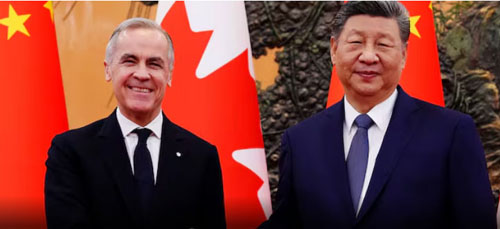
Today Prime Minister Mark Carney met with the President of the People’s Republic of China, Xi Jinping, as part of his first official visit as Canadian Prime Minister..
The leaders focused on renewing the relationship between Canada and China in the face of a changing global economy and international security challenges.
Strategic partnership:
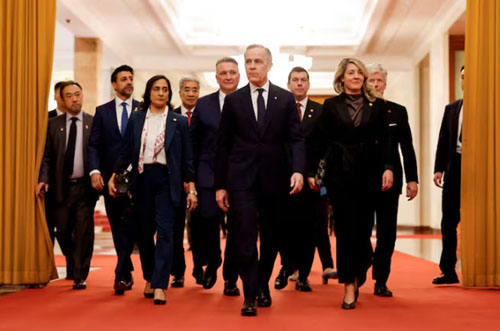
Prime Minister Carney and President Xi jointly announced a new Canada-China strategic partnership, comprised of five pillars: energy, economic and trade cooperation, public safety and security, multilateralism, and culture and people-to-people ties.
According to a news release from the Prime Minister’s Office (PMO) the leaders agreed that those are areas where Canada and China can work together constructively to create more stability, security, and prosperity for their peoples.
In particular, they acknowledged the strategic opportunities in energy – both conventional and clean – to drive the low-carbon economy, increase energy security, and create high-paying careers.

MOU’s:
To this end, the leaders welcomed a series of memorandums of understanding across energy, combatting crime, modern wood construction, culture, and food safety and plant and animal health that provide the foundation for the new strategic partnership.
Economic resilience:
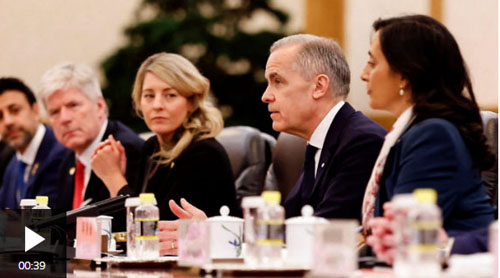
Prime Minister Carney highlighted the importance of reinforcing economic resilience between the two countries, including through revitalised bilateral mechanisms such as the Economic and Financial Strategic Dialogue and the Ministerial Dialogue on Energy, which will reinforce trade and economic relations.
Agricultural products and EVs:
The leaders also welcomed the significant progress made on resolving trade irritants and market access challenges, including for Canadian agriculture and agri-food products such as canola and seafood, and Chinese electric vehicles.
“Agri-food and trade are foundations of the longstanding relationship between Canada and China – and China continues to be our second-largest export market,” stated Carney in a news release this morning.
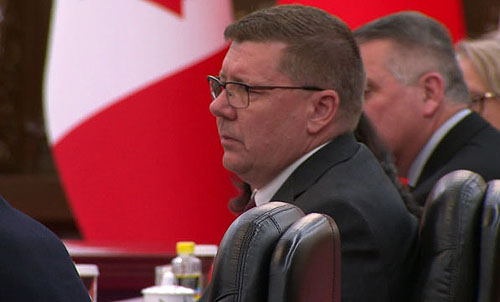
Carney expects Beijing to drop canola seed duties to 15 per cent by March; currently the tariff level is about 85%. According to CBC, Canadian canola meal, lobsters, crabs and peas will no longer be subject to Chinese tariffs from March to at least the end of the year.
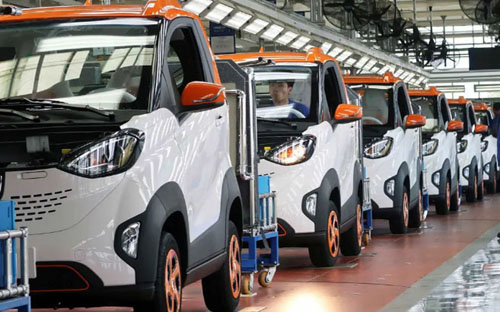
Prime Minister Mark Carney told media that he has reached a deal with China to allow tens of thousands of Chinese electric vehicles into the country in exchange for the lower canola duties. Canada will allow up to 49,000 Chinese electric vehicles into the Canadian market at a 6.1% tariff rate.
This amount corresponds to volumes in the year prior to recent trade frictions on these imports (2023-2024), representing less than 3% of the Canadian market for new vehicles sold in Canada.
It is expected that within three years, this agreement will drive considerable new Chinese joint-venture investment in Canada with trusted partners to protect and create new auto manufacturing careers for Canadian workers, and ensure a robust build-out of Canada’s EV supply chain.
EVs:
“With this agreement, it is also anticipated that, in five years, more than 50% of these vehicles will be affordable EVs with an import price of less than $35,000, creating new lower-cost options for Canadian consumers,” it was stated by the PMO.
Agriculture:
“To renew and strengthen that relationship, Prime Minister Carney and President Xi secured a preliminary agreement-in-principle with landmark measures to remove trade barriers and reduce tariffs,” as stated in the January 16, 2026 PMO news release:
- By March 1, 2026, Canada expects that China will lower tariffs on Canadian canola seed to a combined rate of approximately 15%. China is a $4 billion canola seed market for Canadian producers, and this change represents a significant drop from current combined tariff levels of approximately 85%.
- Canada expects that Canadian canola meal, lobsters, crabs, and peas will not be subject to relevant anti-discrimination tariffs from March 1, 2026, until at least the end of this year.

Trade diversification goals:
The results of the agri-food and EV agreements are expected to help unlock nearly $3 billion in export orders for Canadian workers and businesses as they realize the full potential of the massive Chinese market of 1.4 billion people, says the PMO’s news release.
To build on this momentum “Canada has set an ambitious goal to increase exports to China by 50% by 2030”, the PMO states.
“To achieve this outcome, Prime Minister Carney and President Xi discussed increasing two-way investment in clean energy and technology, agri-food, wood products, and other sectors.”
Environment and climate change:
The Prime Minister and the President affirmed their commitment to multilateralism and to addressing pressing global issues, such as environmental protection and climate change, and the international monetary and financial system.

Multicultural fabric of Canada:
Both leaders recognised how long-standing people-to-people ties have been foundational to the depth and breadth of Canada-China relations. Prime Minister Carney acknowledged the contribution of those deep roots to Canada’s multicultural fabric and welcomed enhanced cooperation in the areas of culture, tourism, and education.

More on national security:
The PMO says that Prime Minister Carney welcomed plans to deepen engagement on national security issues at senior levels, highlighting opportunities to work together on security issues of mutual concern, including narcotics trafficking and cybercrime.
Discussions on these topics might be considered a success in terms of broaching the subject and leaving things open for more discussion.
Next visit to China in November 2026:
Prime Minister Carney looks forward to his return visit to China in November for the APEC Leaders’ Summit in Shenzhen.
The leaders agreed to remain in close contact.

===== RELATED:
- Carney meets with China’s PM and Standing Committee Chair (January 15, 2026)
- Carney arrives in China for official visit, balancing domestic economic challenges (January 14, 2026)
- High-level contingent joining Carney on diplomatic trade mission to China (January 12, 2026)
- NEWS SECTIONS: CANADA-NATIONAL | TRADE DIVERSIFICATION