



Saturday August 30, 2025 | VICTORIA, BC
by Mary P Brooke | Island Social Trends
Government workers with the BC Government Employees union (BCGEU) may be on strike starting Tuesday September 2.
Their 34,000 membership of BC public sector workers voted 92.7% in favour of job action, as announced on Friday August 29. Overall, BCGEU has 95,000 members.

Over 86 per cent of eligible members voted. The 72-hour strike notice was issued yesterday.
In previous such strikes, essential government services like public safety and welfare-type support payments have not be interrupted.
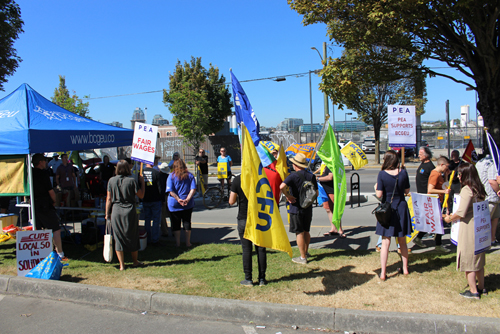
Economic realities:
The BC Government has been adapting its budget — generally cutting everywhere it can — in response to the impact of the US trade war.
As a ‘people first’ NDP government, the responsibility to honour fair wages is generally not an opposing issue for the government of the day, but there are budget realities.
Negotiations since January 2025:
A strike vote was called following a breakdown in negotiations between the BCGEU and the PSA on July 18, 2025. Voting began on August 11 and closed today. The successful strike vote allows job action to take place within 90 days, following 72-hour strike notice.
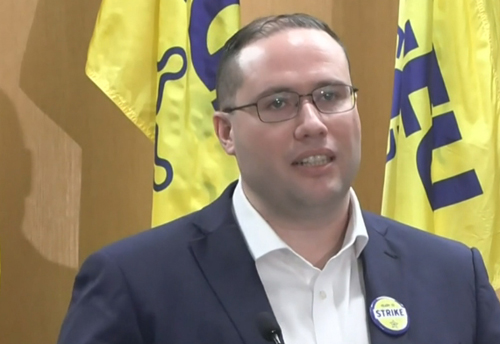
The BCGEU’s public service bargaining unit is one of the largest in B.C., consisting of over 34,000 members. Negotiations with the BC Public Service Agency began on January 22, 2025.
Brief government comment:
Acting Deputy Premier Mike Farnworth in a hastily-called news briefing yesterday afternoon in Vancouver reiterated what most governments say under strike-related circumstances, i.e. that ‘the best deal is achieved at the bargaining table’.
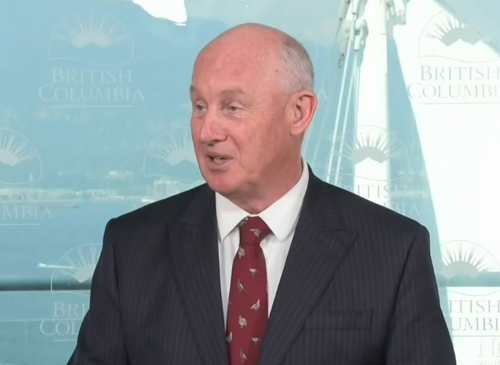
He said the BC Labour Relations Board will determine essential service levels for roles that involve public safety, such as firefighters or sheriffs.
Negotiators will meet again next week, Farnworth indicated.

BCGEU on Cost of living:
As the cost of living continues to escalate for all people in BC, the BCGEU is fighting for the protection of their members.
They want to “secure a fair contract that keeps B.C.’s public services strong,” as stated by BCGEU in a news release on Friday.
T”It’s time for the BC Government to invest in the public service. We can’t keep losing experts like engineers and youth psychologists, who provide critical services to the province,” said Melissa Moroz, Executive Director of the PEA and lead negotiator for the union. “We made a strategic decision a year ago that we would stand beside the BCGEU.”
A spring survey conducted by the BCGEU revealed that because public service wages in B.C. have not kept pace with the cost of living, BCGEU members’ overall precarity has increased. Seventy per cent report spending more than 30 per cent of their pre-tax income on housing costs, which is not much different for many other people in BC.
Living paycheque to paycheque, relying on savings to pay living expenses, and working a second job to make ends meet are concerns for many people in BC, but BCGEU has articulated those.
Cost of living overall impacts:
As Island Social Trends has outlined in several editorials over the past few years< household debt continues to be the highest it’s ever been in Canada.

People have had to make significant and often long-term adjustments to their lives and lifestyles including paying much higher rents or shifting their household social situation.
In order to make ends meet many households and small businesses have taken on even more debt (where banks are willing), and/or make smaller less frequent payments on their credit obligations.
The cost of nearly everything has gone up, including the basics of life like groceries, housing, transportation and insurance.
The spillover effect of those new burdens is seen across society including the impacts on health and well-being of individuals, households and communities.

Telework and modernization:
BCGEUworkers are seeking competitive wages that address the affordability crisis, fair access to telework, a modernized contract that more fairly values their work, and a limit on non-union managers so more resources can be made available to fund the frontlines.
Union vs non:
“Government has been hiring excluded managers at twice the rate of frontline workers which means more bureaucracy, fewer people serving the public, and workers forced to do more with less,” said BCGEU President Paul Finch yesterday. “We need an agreement that addresses the needs of working people in this province.”

Two-year deal:
The union’s proposal, tabled the week of June 23, 2025, was for a two-year deal and proposes lifting wages for members at the lower end of the pay scale, and targeted occupational adjustments and bonuses into base salaries to provide lasting improvements. The proposal is designed to address the affordability crisis workers are facing so that we can strengthen the public services people in British Columbia depend on.
“Our workplace can’t hold onto staff. People leave for higher-paying jobs elsewhere, and we’re stuck in a cycle of constant vacancies, endless training, and burnout,” said Ping Leong, BCGEU member and Family Justice Counsellor. “We need stability in our jobs to provide reliable, sustainable services for the people who depend on us.”
Background:
In support of workers’ demands, the BCGEU released the July 2025 report B.C.’s public service: An investment in public safety and a healthy economy.
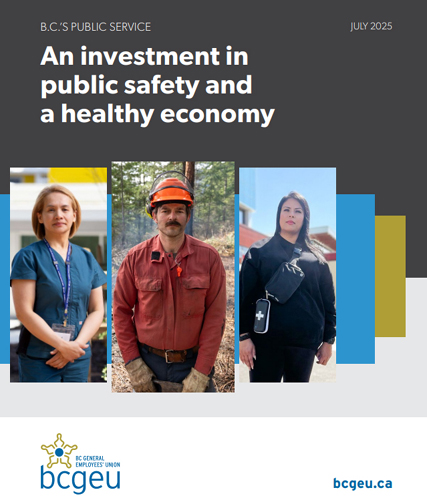
That report highlighted the premise that “B.C.’s public service workers are in an affordability crisis— and that puts the services everyone relies on at risk”.

===== RELATED:
- $1 million 6/49 winner plans to invest for retirement (June 5, 2025)
- Businesses & consumers need significant interest rate drop March 12 (March 10, 2025)
- BCGEU strikers joined by PEA at downtown Victoria street rally (August 17, 2022)
- NEWS SECTIONS: 43rd BC PARLIAMENT | JOBS & EMPLOYMENT | AFFORDABILITY | EDITORIALS