


Saturday November 8, 2025 | VICTORIA, BC
by Mary P Brooke | Island Social Trends
BC Hydro’s public charging network has recently been expanded, now reaching a significant milestone with more than 700 electric vehicle (EV) charging ports province-wide.
This latest expansion comes as BC Hydro is incorporating 88 charging ports at 28 EV charging sites that were previously operated by the Ministry of Transportation and Transit.
BC Hydro issued a news release on November 4 about all this, quoting Adrian Dix, Minister of Energy and Climate Solutions: “Surpassing more than 700 charging ports is a clear reflection of BC Hydro’s commitment and leadership in building a reliable and accessible EV public charging network across British Columbia,” said Adrian Dix, Minister of Energy and Climate Solutions.
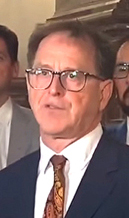
“This expansion reinforces our commitment to build the infrastructure needed to support the growing demand for electric vehicles and to drive sustainable economic growth throughout our province,” said Dix.
“This expansion strengthens our public charging network and ensures EV drivers benefit from BC Hydro’s reliable service, including 24/7 customer support and access to clean, affordable electricity,” said BC Hydro CEO Charlotte Mitha.

BC Hydro’s province-wide fast charging network currently includes 709 charging ports at 160 sites in communities throughout B.C. BC Hydro is looking to reach 800 charging ports in its network by spring 2026.
The EV charging station infrastructure is in support of the demands brought on by population growth. There are more than 215,000 EVs on the road in BC, according to BC Hydro.

Fast chargers & Level 2 chargers:
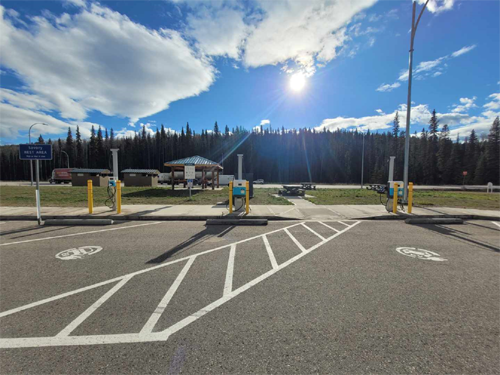
The 88 charging ports at 28 EV sites include a mix of fast chargers and Level 2 chargers located at highway rest stops and key travel corridors.
Specifically, BC Hydro will take ownership of:
- 33 fast chargers (50-kilowatt)
- 16 fast chargers (25-kilowatt)
- 39 Level 2 chargers
These sites will transition to BC Hydro’s energy-based rates, which have been approved by the B.C. Utilities Commission (BCUC) and are in line with other public charging services in B.C.
BC Hydro expects all 28 sites to be fully integrated into its network by the end of 2025.

Streamlining the system:
“By transferring these 28 electric vehicle charging sites to BC Hydro, we’re streamlining our focus on maintaining a safe and efficient transportation system for all British Columbians,” said Mike Farnworth, Minister of Transportation and Transit in last week’s news release. “BC Hydro’s expertise and infrastructure make it the ideal steward to ensure reliable charging across the province,” said Farnworth.

Sites transferring to BC Hydro:
Here is a list of sites transferring from the province to BC Hydro:
Vancouver Island:
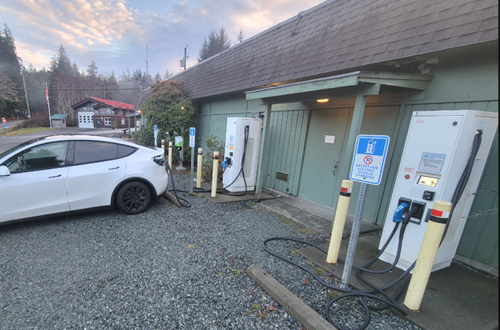
- Port Renfrew Community Centre (Hwy. 14)
- Buckley Bay Rest Area (Hwy. 19 between Qualicum Beach and Courtenay)
- Sooke Rd. Park and Ride (Hwy. 14 at Gillespie Rd.)
- Woss – (Hwy. 19)
- Taylor River Rest Area (Hwy. 4 between Port Alberni and Tofino)
Mainland:
- Mile 80 Rest Area (Hwy. 97 north of Fort St. John)
- Boulder Creek Rest Area (Hwy. 37, Kitwanga, 50km west of Hazelton)
- Thornhill Roundabout (Hwy. 37 at Motz Road)
- Savory Rest Area (Hwy. 16 west of Endako)
- Cluculz Rest Area (Hwy. 16 east of Vanderhoof)
- Slim Creek Rest Area (Hwy. 16 120km east of Prince George)
- Mt. Terry Fox Rest Area (Hwy. 16 20km west of Mount Robson)
- Mt. Robson Visitor Centre (Hwy. 16)
- Australian Rest Area (Hwy. 97 36km south of Quesnel)
- 100 Mile House Information Centre (Hwy. 97, South Cariboo Visitor Centre)
- Hanceville Lookout Rest Area (Hwy. 20, 85km west of Williams Lake)
- Wire Cache Rest Area (Hwy. 5 between Clearwater and Avola)
- Shelter Bay Ferry Terminal (Hwy. 23 south of Revelstoke)
- Spillimacheen Rest Area (Hwy. 95 between Radium Hot Springs and Golden)
- Wasa Rest Area (Hwy. 93 between Canal Flats and Cranbrook)
- Una Rest Area (Hwy. 97 30km northeast of Vernon)
- Redhill Rest Area (Hwy. 1 south of Ashcroft)
- East Pine Rest Area (Hwy. 97 70km west of Dawson Creek)
- Little Fort Rest Area (Hwy. 5 between Barriere and Clearwater)
- Fishtrap Rest Area (Hwy. 5 between Kamloops and Barriere)
- Illecillewaet Brake Check (Hwy. 1 between Revelstoke and Glacier)
- Loon Lake Rest Area (Hwy. 97C between Merritt and Kelowna)
- Hope Slide Viewpoint (Hwy. 3 east of Hope)
State of the art hubs:
BC Hydro is working to build a robust EV charging network across the province. Recent milestones include:
- Network expansion: In the past year alone, BC Hydro has tripled the size of its public charging network, adding 418 new charging ports.
- State-of-the-art hubs: About two-dozen new hubs have opened in every region of the province, each featuring 8 to 22 charging ports, to help minimize wait times for drivers.
- Next-gen fast chargers: BC Hydro deployed new 350-kilowatt chargers at some locations, capable of delivering up to 100 kilometers of range in just five minutes.
- Completion of the Electric Highway: With fast chargers placed about every 150 kilometers along major routes, the Government of B.C. completed the Electric Highway in September 2024. BC Hydro operates 114 of the highway’s 155 charging locations, making up more than 70 per cent of the network. Once the transition of the Ministry of Transportation and Transit charging sites to BC Hydro is complete, BC Hydro will operate more than 90% of the network.

Upcoming 400 kW charger:
Later this year, BC Hydro will debut its first 400-kilowatt charger, offering 100 kilometres of range in just three minutes. The chargers are funded in a partnership with the Province of B.C. and Natural Resources Canada.
===== RELATED:
- West Shore RCMP: EV charging cables cut & stolen at numerous locations (October 31, 2025)
- EV charging stations bring BC electric highway to fuller completion (September 6, 2024)
- NEW SECTIONS: LIVING WITH CLIMATE CHANGE | BC HYDRO | ELECTRICITY & CLEAN ENERGY | TRAFFIC UPDATES