


Monday April 6, 2026 | OFF-PLANET [6:46 am PT Update 12:25 & 12:39 & 12:45 & 12:51 pm]
by Mary P Brooke | Island Social Trends
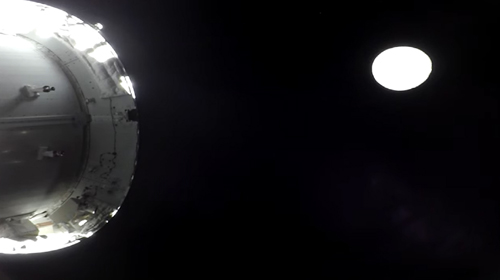
This is the day that the Orion space capsule carrying the Artemis II crew will travel behind the moon.
There will be a communications blackout of about 40 to 50 minutes starting around 3:47 pm PT and lasting to about 4:30 pm PT.
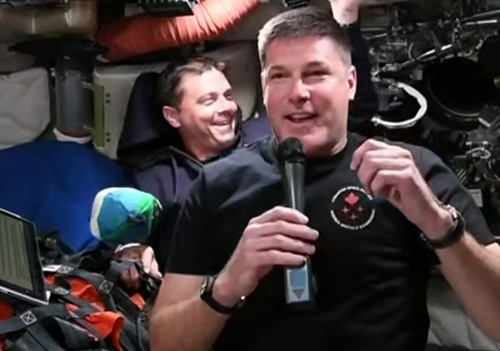
The four astronauts on board Integrity (the crew’s chosen name for the Orion vessel for this mission) will be busy performing a list of assigned activities during the 50-minute flyby of the back side of the moon.
That includes taking photos but also observing the lunar surface with the human eye (catching nuances of colour that technology can’t achieve).
From Earth’s vantage point here on Earth we can never see the back (‘dark’) side of the Moon.
A few more days to go:
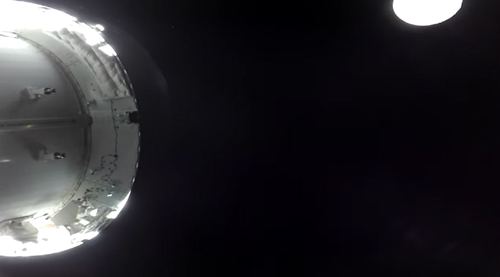
This is Day 6 of the 10-day Artemis II mission. Splash down is expected on Thursday into the Pacific Ocean off the west coast of California.

Human interest:
This space flight has stirred up a lot of interest in many sectors of society and the economy.
Many things will be learned about the geography of the moon and the impacts of space flight on humans.
Advancements with food and safety and technological proficiency in outer space will have been taken a step further.

Observations while approaching the moon:
The moon looks increasingly brown in colour to the Artemis II crew as their vessel gets closer to the Moon, one of the crew members told mission control, said one of the crew about 12:26 pm PT today.
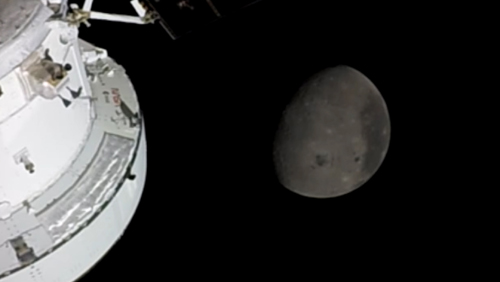
“It’s very taxing event on the eyes – a very bright moon working from a dark cabin,” said Artemis II pilot Victoria Glover who added that “it has been an exercise, a difficult thing to manage” and that he feels his eyes adjusting as he looks back into the cabin again.
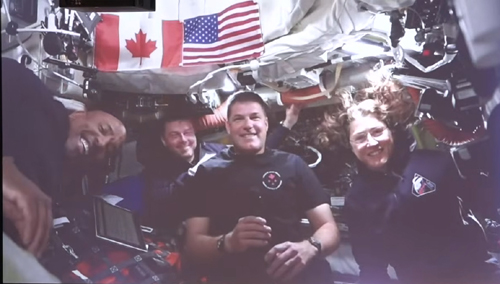
“All the small craters… it looks like a lampshade with prick holes with the light shining through,” said Mission Specialist Christina Koch about observing the small craters with human eyes.
The crew was observing some specifics of lunar geography, with Glover describing some craters and mathematical angles between them. Some details were given about Zeeman crater. The view changes quickly. The next view was another crater to be described.
It’s possible that better descriptive skills are needed. There seemed to be some inefficiencies in describing what’s being seen (both sides of the conversation — mission control and astronaut).
“I wish I had more time to sit here and describe what I’m seeing here,” said Glover. He then reported some variations in terrain and sizes of craters. He described “some really interesting variations” such as a 110-degree angle instead of a smooth edge. He sees deep canyons coming up out of a crater. They look to be islands out beyond the terminator. They are catching sunlight on the peaks. It’s very interesting to see.”
The Houston rep told the crew that their descriptions are “bringing along” humanity.
All crew members will keep the same windows/positions for all observations, said Koch to mission control as a conclusion made by the crew. This seems like a basic operational procedure that should have been planned ahead of time.
Working in teams of two, the astronauts switched positions (from window back into cabin work). Glover and Koch are one team, while Wiseman and Hansen are the other. A switch-over of teams was taking place around 12:51 pm PT, which mission control said could take place over the next 15 minutes.
More observations to come.

Tech notes:
At 12:40 pm, mission control to Integrity: “Waste water correction limit reached. No correction.”
Political benefits:
This mission to the Moon seems to have bolstered an awareness of how Canada’s space agency takes part in NASA space missions and programs.
The USA investing in NASA puts the whole world into forward-motion toward the stated goal of setting of a Moon base and then getting out to Mars (as a way to be placing humanity further into deep space).

===== RELATED:
- Artemis II: Day 5 tech talk and Easter messages (April 5, 2026)
- Hansen chats with Canadian youth in Sunday morning livestream (April 5, 2026)
- Artemis II from Earth to Moon and back: Day 4 update (April 4, 2026)
- Artemis II crew: burning smell so far not of concern (April 4, 2026)
- Artemis II: Day 3 meals & tech work (April 3, 2026)
- Artemis II: Col Jeremy Hansen says “It was a great burn!” (April 2, 2026)
- Day 2 technology details for Artemis II crew (April 2, 2026)
- Artemis II: troubleshooting some technical things (April 2, 2026)
- Canadian astronaut Jeremy Hansen heads to the moon (April 1, 2026)
- Artemis Mission Updates (NASA)
- NEWS SECTIONS: AEROSPACE | OFF-PLANET | TECHNOLOGY | NASA