


Sunday April 12, 2026 | VICTORIA, BC [12:41 pm PT]
Editorial analysis | by Mary P Brooke | Island Social Trends
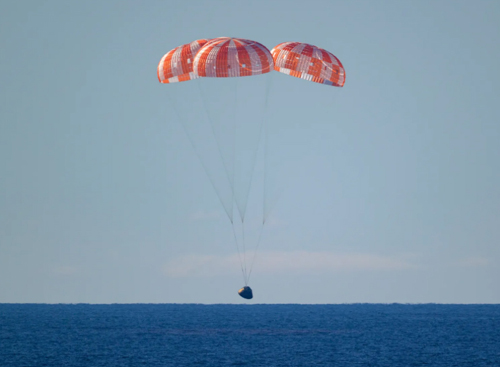
The Artemis II crew of four astronauts — three Americans and one Canadian — arrived back on Earth on Friday.
Many people on the planet never even knew they’d left.
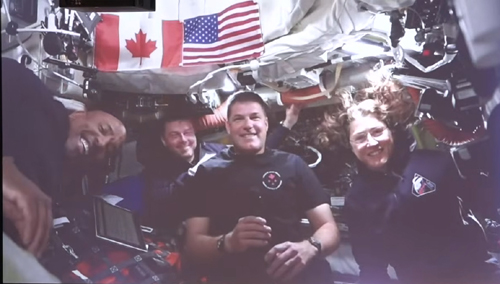
The 10-day period of the Artemis II mission from launch on April 1 to splashdown on April 10 was a huge event in the world of aerospace, technology and for some aspects of international politics.
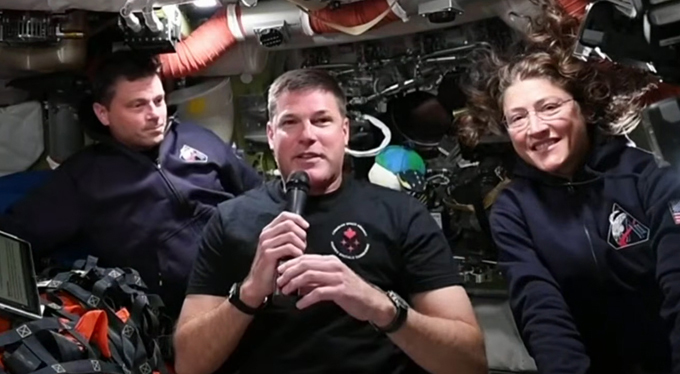
And the very next day, the four astronauts were in the media limelight — back in gravity – on a stage in Houston to deliver their first of likely many remarks about their journey to and around the Moon and back.

But for many people living their daily lives the entire event was eclipsed by not just the challenges of everyday life but the strange reality of people tuning-out. Huge chunks of the population are connected to their phones but more specifically to their own communication silos.
In particular, many adults under the age of 35 sometimes never watch current news streams or stay connected with world events in a real-time way. And NASA in their presentation of Artemis II seemed to go along with that.

What got missed here?
For people on planet Earth, missing the launch of the Artemis II crew on board Integrity — or to follow the 10-day pulse of the Artemis II mission in real time — was to miss a moment in human history where humanity ‘left the building’.
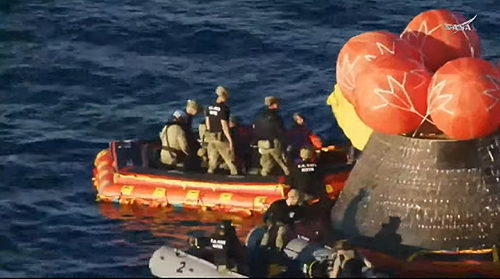
Yes, there was high-profile media coverage of the splashdown on April 10 — the stuff of TV movies about space and marine adventure including sophisticated aerial photography and pre-panned photo ops on the US Navy ship where helicopters landed to bring the astronauts back home.
There was an amazing NASA presentation of 24/7 livestream of two-way communications with the Artemis II crew — for all the world to see and hear as the mission unfolded.
Indeed there have been other missions to or around the Moon in previous decades — notably 1969 was a big year. Three missions! The Apollo 9 mission was a test flight remaining in Earth’s orbit to test lunar technology, the Apollo 10 mission made the first lunar orbit and tested a moon lander, and the Apollo 11 mission fully landed astronauts onto the surface of the Moon.
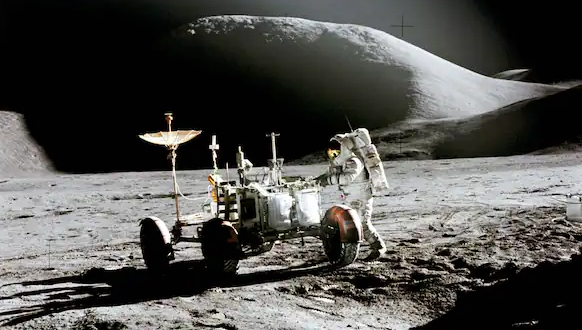
It was the Apollo 11 mission that changed the societal psyche about space travel. Neil Armstrong on July 20, 1969 delivered these infamous words: “That’s one small step for man, one giant leap for mankind.”
Perhaps NASA thought that Artemis II being ‘just’ a test flight didn’t deserve the same magnitude of promotion that Apollo 11 got in 1969 (an event where people who were alive then still remember where they were and what they were doing when Armstrong landed on the Moon).

Artemis II was ‘just one’ in a series, perhaps. During the Artemis II journey of April 11 to 10 (and April 11 to include the short recognition ceremony in Houston) NASA has been listing off the goals of upcoming missions Artemis III, IV and V all along.
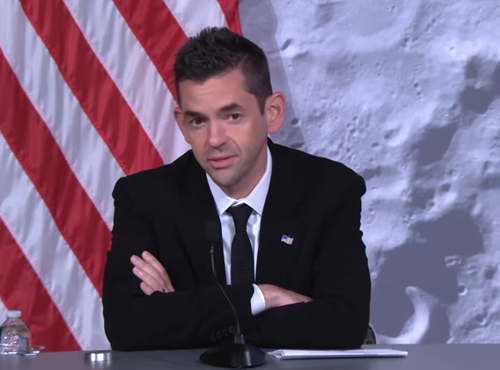
With landing on the Moon as their big performance currently scheduled for 2028. NASA Director Jared Isaacman made a point of saying that through the press conferences last week, and again with the four Artemis II astronauts on stage in Houston.
But when the Artemis II crew stepped onto their Orion spacecraft (nicknamed Integrity) on April 1, that’s when everything changed. Heading to the far side of the Moon would take the astronauts out of Earth’s protective atmosphere in a way not done before.
Artemis II came with a statement of NASA’s intention to head to Mars after that. A moment of signalling that humanity now intends to leave the planet that has protected and nurtured them for millennia and not look back.

Fragility of home:
From out in space, the astronauts could see a vibrant blue and white globe — the Earth, their home.
The fragility of Earth as home becomes clear for astronauts.
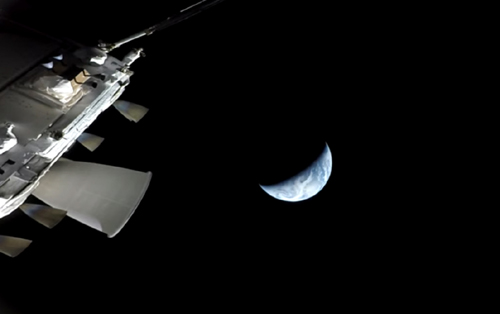
The sight of it reinforces just how special and possibly unique this planet is, to have sustained life with a protective breathable atmosphere and a gravitational field that holds us up just right, with water to drink and sustain all life, with plants for cleaning the air and serving as food, with other people to keep us company.


And abundance of every kind — including a sort of ethereal balance that keeps it all humming as King Charles III pointed out in his 2023 Astra Carta and in a letter to Col Jeremy Hansen on March 31 prior to the Artemis II flight.

Planet Earth as crew:
In the past decade or so it’s been no big deal about off-planet things.
The international space station has been operational with astronauts up and down to low earth orbit and living there in a microgravity environment since 2020, satellites are hurtled into Earth’s orbit all the time (making possible modern real-time telecommunications), and touristy trips for a few minutes on a rocket are becoming almost mainstream (for wealthy people).
“It’s a special thing to be a human, and a special thing to be on planet earth,” said Artemis II mission Commander Reid Wiseman yesterday when he and his crew were honoured on-stage in Houston.
“Planet Earth, you are a crew,” said Artemis II Mission Specialist Christina Koch yesterday.
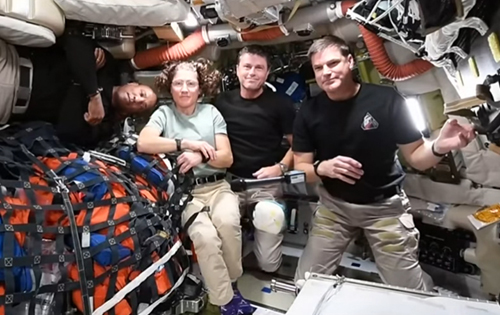
And to instinctively making the point about connectedness: “This is the furthest I’ve been away from Reid in a long time,” said Canadian astronaut Col Jeremy Hansen who was a Mission Specialist on Artemis II, referring to Commander Wiseman who then made his way across the stage to be alongside Hansen as the last of the four astronauts to deliver remarks yesterday.
Experiential shortfall:
Yes, there was a 24/7 livestream to hear and watch the astronauts on board, almost daily NASA press conferences (including live with the Artemis II astronauts on board Integrity), and daily short videos about the mission posted on YouTube. Perhaps that speaks to the normalcy of space missions in this decade.
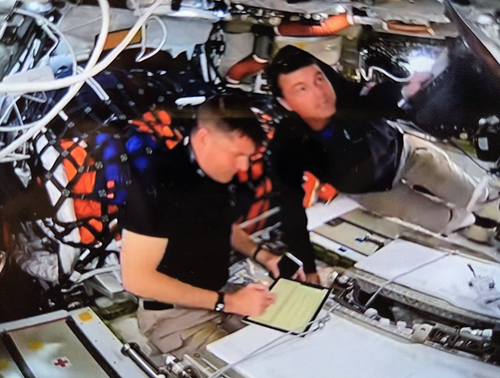
But many people — when they heard about the delicacy and future mission-thrust of the Artemis II mission — felt like they’d been robbed of a sociocultural experience. This means that humanity is ready for more in the process of understanding how human leadership is changing the very nature of being Earthbound. We want more than tech talk about how the spacecraft is doing when in flight (as important as that is).
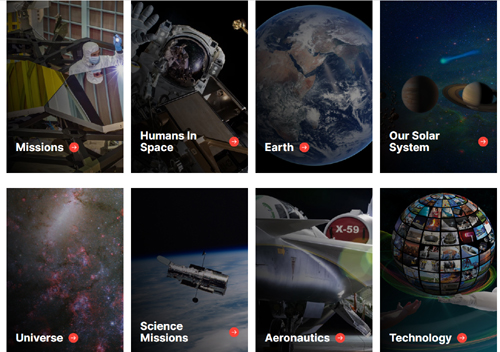
To be fair, NASA does see the broader technical and human scope of their mission, as reflected in their content at Nasa.gov.
Who will lead beyond Earth?
We are no longer just grounded here on Earth. The space race is renewed.
When Artemis II launched into space on April 1 with the goal of humanity never turning back from space exploration, there was a sense of choice about innocence lost. Like a teenager graduating from high school and moving on to a big world where protections are few and challenges both endless and oftentimes dangerous.
And perhaps the the United States which is currently having difficulty with geopolitics on this planet, is aiming to take Earth leadership with its space program.
There’s politics there too… with the US (in cooperation with Canada and Europe) leading the journey into space, there is some manner of political protection from (or at least a statement about) humanity regarding other political approaches from other countries on this planet.
If and when it comes time for Earth to be represented to beings or entities from other realms of space or time, who do we want at the helm?

Coming home:
With the excitement and adventure that lies ahead, few young adults who leave home ever realize how much they will eventually seek to return in some manner. To seek and be embraced by the innocence lost, to heal wounds, to be wiser.
It’s quite a thing that NASA and the United States funding of the renewed space adventure will seek to bring the best of humanity into their fold. Chasing the unknown comes with risk and danger. Who will be educated to sacrifice themselves and utilize their families in support for that?

This aspect of the new adventure is not lost on NASA or the astronauts. With almost every breath during the Artemis II mission they talked about inspiring the next generation and offering their commitment to be there, cheering them on.
Again Commander Wiseman put this in context. Yesterday he said that getting onto the spacecraft and shooting away from Earth’s orbit was the most exciting thing — something he had looked forward to for a long time. But once the crew was above and away from the Earth, all they could think about was getting home to their families and friends.
“No one know what the families went through,” said Wiseman in his televised remarks on stage.
It’s great to get away (on any sort of vacation or adventure), but it’s great to come home. Perhaps that is the larger lesson of space travel. We will explore but we will return — importantly, we will want to return.

Earth Day:
Recognizing Earth Day each year on April 22 is one good way to acknowledge how you feel about and interact with the Earth.
But now it will be important to include aspects of recognizing the challenges of the human family as well as the climate challenges for the physical planet.

===== RELATED:
- Artemis II splashdown, four astronauts home! (April 10, 2026)
- Day 10: Artemis II crew on their way home (April 10, 2026)
- Astronaut Jeremy Hansen on mission funding & just doing your best (April 9, 2026)
- Artemis II: Computers, iPhones & email (April 8, 2026)
- Artemis II crew wakes up Day 8 to ‘Under Pressure’ (April 8, 2026)
- Artemis II: Day 5 tech talk and Easter messages (April 5, 2026)
- Hansen chats with Canadian youth in Sunday morning livestream (April 5, 2026)
- Artemis II from Earth to Moon and back: Day 4 update (April 4, 2026)
- Artemis II crew: burning smell so far not of concern (April 4, 2026)
- Artemis II: Day 3 meals & tech work (April 3, 2026)
- Artemis II: Col Jeremy Hansen says “It was a great burn!” (April 2, 2026)
- Day 2 technology details for Artemis II crew (April 2, 2026)
- Artemis II: troubleshooting some technical things (April 2, 2026)
- Canadian astronaut Jeremy Hansen heads to the moon (April 1, 2026)
- Artemis Mission Updates (NASA)
- NEWS SECTIONS: AEROSPACE | OFF-PLANET | TECHNOLOGY | NASA