


Tuesday December 9, 2025 | VICTORIA, BC
Editorial commentary by Mary P Brooke, Editor | Island Social Trends
Politicians & business leaders: Contact Island Social Trends for a year-end interview.
A seismic shift in the Canadian economy has begun slowly.
Well, the shotgun moment was a sudden one — that was Trump and his infliction of a new economic order on the global economy, including a pinch point for Canada (all that 51st state stuff).
for a while there was ‘elbows up’. But now the elbows of Canadians are back down and working hard.
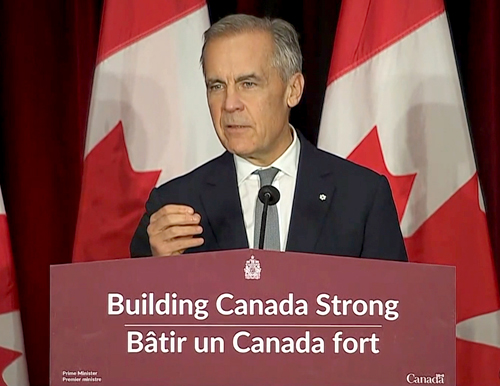
But the changes needed for the Canadian economy have been long in coming. For years now, the Bank of Canada and economists have been talking about low productivity — a phenomenon that dug in starting around the year 2000. Private sector business investment has been sluggish since the 2008 economic crash — something the Carney Liberal government vision now seems to want to revive.
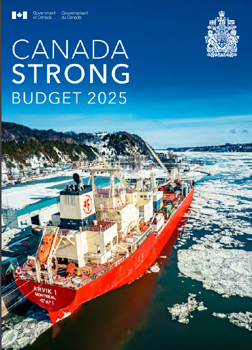
The federal government led by Prime Minister Mark Carney seems to have a plan for shepherding Canadians through a rough economic road ahead. It was the key strategy in Budget 2025 though in ways that it turns out were not easily communicated to business and the general Canadian workforce.
For example, the ‘debate’ over separating operating and capital in the budget devolved into an accounting practice discussion when really it should have been highlighted for its effort to communicate how the country will move forward economically through investment.
That has also included some clunky moments — like the recent MOU with Alberta about a possible pipeline project — an exercise in which Carney burned a lot of political capital with BC and coastal First Nations and lost a cabinet minister over it as the departure from previous climate policy was too much for now former Cabinet minister Steven Guilbeault).

Writing on the wall:
Writing was on the wall much earlier this year that key manufacturing sectors like steel, aluminum and auto-assembly would be hit hard. Those are the obvious targets for Trump. He rolled the forestry sector into that attack as well, though it took longer for the federal government to loop softwood lumber supports into their plan (kudos to the BC government for calling a Forestry summit to help achieve that).
The lagtime for probably most of Canadian businesses and households has been similar — it has taken a while for the magnitude of this economic shift to really sink in. Carney did try to hint at it in his ‘sacrifice speech’ back in October, but his communications team fell short of making that a sterling moment that might have better rallied Canadians to what is coming.
Last week when it was announced that over 1,000 workers at the Algoma steel plant in northern Ontario would lose their jobs it seemed like a sudden move — almost a betrayal, given that the company received a loan of about half a billion dollars months earlier.
But here’s where people need to start thinking along broader lines.
The federal does finally see — under Carney’s leadership — that the workforce needs to be retooled and reskilled for a new age. The Trump shock was a kick in the pants that Canada actually needed. The Algoma plant is a good example — their CEO said in news interviews that the company already had plans to change their manufacturing methods and equipment — but the advent of the US economic attack brought that fast-forward to 2025. As the plant retools they won’t need the same sorts of workers or as many.
Many of the lost jobs were well-paid union employment for skilled workers and for support of their families. So of course the job loss will be tragic, even with EI support.

Workforce adaptation:
But the Algoma scenario is a good example of the workforce transition that Carney seems to have in mind. Workers leaving outmoded or challenged/closed facilities are a workforce now available for retaining for the new economy. That also applies to workers who are and will be leaving Canada Post which was following an old business model that has finally collapsed.
This week Canada’s minister of AI — a brand new portfolio under the Carney Liberal government — is hosting AI ministers from across the G7. He also announced a deal with Germany, so that Canada can be part of the fast-moving adoption of AI throughout the workforce and economy. Businesses and governments at all levels will want to keep up with AI technological applications, and have plans for supporting workers through job loss into training and new roles. Notably, there are deep divisions between the EU and the US on AI regulation.
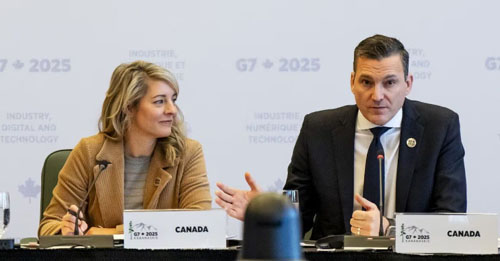
“Combined with our technological capabilities, we are positioned to lead responsibly, lead with our shared values and trust on AI,” said Minister of Artificial Intelligence and Digital Innovation Evan Solomon on Monday at one of this two press conferences — one about the deal with Germany and the other about a deal with the European Union. In this we see the early fruit of Carney’s focus on European economic and trade mission connections made this summer (on the back of his long career in economics and investment).
Sadly, the rest of this decade will present challenges to traditional ways of making a living — and lifestyles in and of themselves. Many workers and families will be experiencing challenges and upheaval but will also be invited to seek (or need to be seeking) training for jobs of the future.
People having to relocate for work or training and municipalities grappling with community support costs are only two of the dynamics that are shifting.

But these changes a re an opportunity for renewal of the Canadian workforce to build and support the new economy of the AI-age.
Not all people will be easily adapted into technological jobs. But there will be a need for more workers in a range of jobs in health-care (including community support-level care), housing development, environmental protection, emergency preparedness and clean-tech sectors.
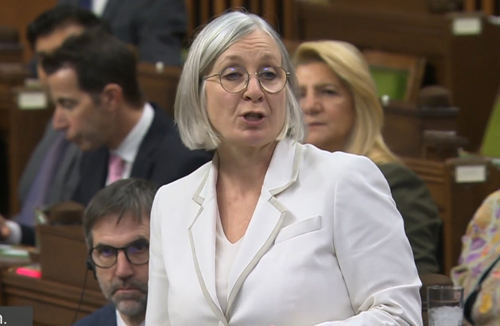
Hints of this transition came through in an Island Social Trends interview with Jobs and Families Minister Patty Hajdu back in October.
Macro/micro:
Prime Minister Carney seems to have a clear macroeconomic vision for steering Canada along through this massive economic shift in Canada. He has said that social supports will be maintained, but if anyone were to worry about that just look at how low-income families are no longer receiving the quarterly climate action tax rebate (which in everyday terms means one or two bills left unpaid).
That’s an example of the micro economic level that will hurt people in the short term in ways that make them less able to deal with the long-term. It wouldn’t be unsuitable for the federal government to provide a one-time bonus to all families earning under $60,000 to help them get through these toughest of times — a CERB-type payment if you will (something the US is considering for next year).

There is vision for the Canadian economic transition — this is good. Let’s hope all the details of taking are of people during this rough ride will also be in place. That will include getting housing supply boosted rapidly, and expanding EI to include the other 60% of the workforce who are not eligible (e.g. self-employed, gig workers, home-based workers, part-time workers, etc).
The big picture sees the current federal spending direction with a focus on infrastructure, big energy projects, and military and national defence. How much that provinces (e.g. health transfers) and Canadian households will be pinched by this is yet to be seen.
Provinces:
The provinces play a role here too. Health-care, housing and many social supports are provincial responsibilities. British Columbia is generally better at putting people first than other jurisdictions. But some economists may be telling BC to be more aggressive with use of their funds and less soft on people. That’s a tough call.
Provinces will each need to customize the Carney-style economic revision to suit their jurisdictions. That includes paying attention to certain production and manufacturing sectors. In BC the strongest suit will be building energy-producing capacity, notably the electricity grid but also the revenues and jobs made possible through the LNG plants and mines.
What people can do:
Likely almost no one will be untouched by this massive shift in economy and society. Certainly businesses and workers will be adapting, but also everyone around them — including famlies and seniors.
Perhaps it’s a rallying cry but also just common sense — that getting on board with the changes that come — being primed for it — is better than being caught by surprise.
===== RELATED:
- Carney and Smith sign pipeline MOU to facilitate economic growth (November 27, 2025)
- Jobs Minister Hajdu on Canada Post, Air Canada, youth employment, retraining supports (November 2, 2025)
- Conservative Leader Poilievre critiques Carney’s ‘sacrifice speech’ as failing youth (October 23, 2023)
- Carney’s sobering pre-budget speech delivered to university students (October 22, 2025)
- NEWS SECTIONS: EDITORIALS | BUSINESS & ECONOMY | 45th PARLIAMENT OF CANADA | MAJOR PROJECTS | 43rd PARLIAMENT OF BC | JOBS & EMPLOYMENT