


Wednesday March 18, 2026 | NATIONAL [10 am PT]
Analysis by Mary P Brooke | Island Social Trends [See March 18, 2026 rate announcement]
The Bank of Canada’s March 18 interest rate announcement was widely expected to see the central bank holding their policy interest rate at 2.25%. And that indeed happen.
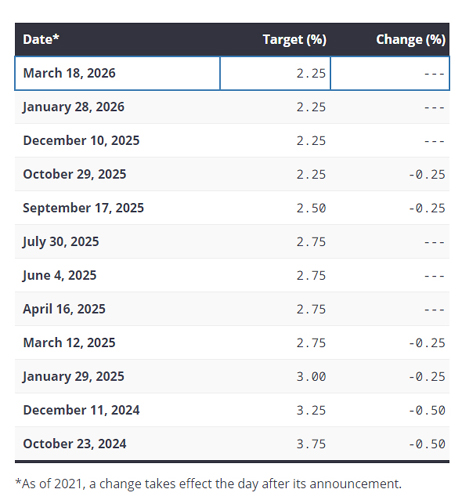
As well, with the Bank Rate at 2.5% and the deposit rate at 2.20%.
There is continued uncertainty in the economy — precipitated by the trade war launched by the United States against Canada last year, but also due to weaknesses in the Canadian economy that have resulted in low productivity and weak investment for decades.
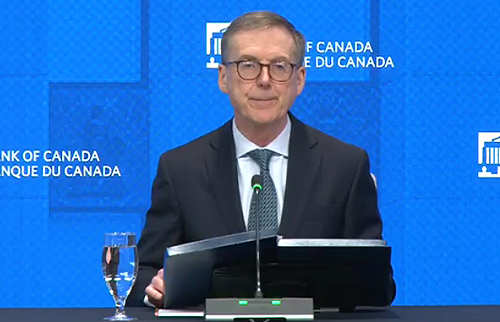
Consumer demand is up and grocery prices remain a problem, said Bank of Canada Governor Tiff Macklem, adding that housing prices are soft.
Outcomes of the CUSMA discusses are still unknown, Macklem points out.
Middle East conflict:
But highlighted in today’s announcement is the sudden impact of the war in the Middle East. “Uncertainty is acute,” said Macklem and duration of that conflict will be a key factor impacting the Canadian economy.
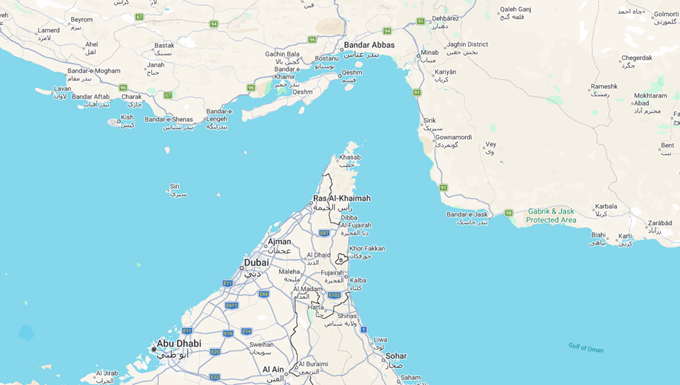
The bottleneck of shipping oil and other goods through the Strait of Hormuz in the Persian Gulf (a a result of the conflict in Iran in the last now nearly three weeks) will contribute to higher oil prices and the cost of everything related to oil and shipping (which is almost everything in Western economies — to a degree not anticipated until very recently).
“The breadth and duration of the conflict, and hence its economic impacts, are highly uncertain,” the Bank stated today. The conflict began with the US and Israel attacking Iran at the end of February, but the conflict has expanded to the wider region.
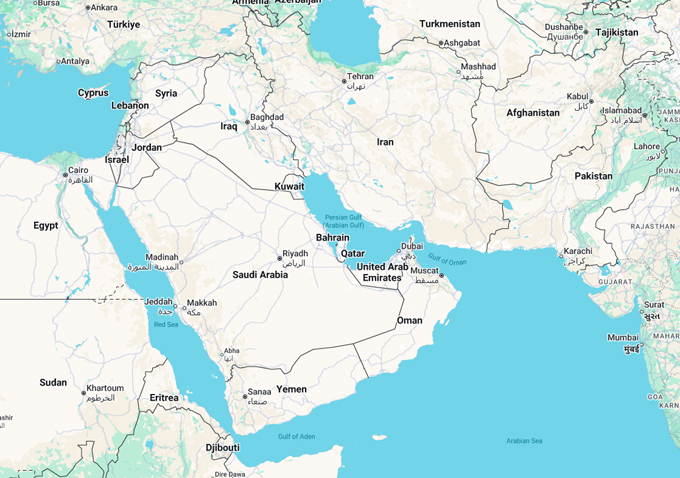
“Since the outbreak of the conflict in the Middle East, global oil and natural gas prices have risen sharply, and this will boost global inflation in the near-term. In addition to energy supply disruptions, transportation bottlenecks stemming from the effective closure of the Strait of Hormuz could impact the supply of other commodities, such as fertilizer. Financial conditions have tightened from accommodative levels,” said Bank of Canada Governor Tiff Macklem in the bank’s March 18, 2026 policy rate statement.
Global bond yields have risen, equity market prices have declined, and credit spreads have widened. The Canada-US dollar exchange rate has remained relatively stable,” said Bank of Canada Governor Tiff Macklem in the bank’s March 18, 2026 policy rate statement.
Rates could start rising again:
“As the outlook evolves, we stand ready to respond as needed,” said Macklem today. That leans to a possible future increase in interest rates just when the Canadian economy was starting to find a stable footing.
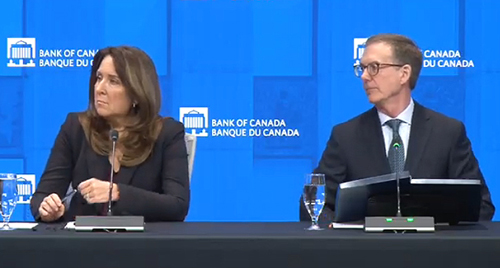
“Food inflation continues to outpace general inflation,” said Deputy Governor Carolyn Rogers today. She notes how transportation and fertilizer cost increases will impact food costs.
Rogers added that the Bank of Canada is “getting better” at assessing supply shocks.
The next rate announcement is scheduled for April 29. After that, the scheduled interest rate announcements in 2026 are scheduled for June 10, July 15, September 2, October 28, and December 9.

Uncertainty in 2025 and early 2026:
In the last few rate announcements by the Bank of Canada, overall economic uncertainty has been the key reason stated by the central bank for not adjusting the rate up or down. see: January 28, 2026 rate announcement | December 10, 2025 rate announcement
Small business impact:
A lower interest rate may have helped some businesses to increase their operational stability and to help manage costs that might be passed on to consumers.

Fiscal policy:
The Bank of Canada has only one blunt tool — the pegging of the key interest rate.
One economist said in national news last week that the federal government could work with fiscal policy to better support the economy in these challenging times.
Prime Minister Mark Carney is clearly taking the long-view on guiding Canada’s economy with macro-level adjustments that involve complex mixes of budget with ‘dual purpose’ development (e.g. roads and other infrastructure in the north that will support both national defence expansion and the development of communities) and strategic trade diversification. The overall approach is essentially asking Canadians to hang on while the big picture shifts.
“The government is very focused on growing this economy – immediate measures but also the confidence and investment in the country that’s more independent, diversifying our partnership, building first and foremost at home, and secure abroad,” said Carney today during a press conference in Oslo where he is developing strategic alliances with Norway.

Consumer affordability:
Many consumers are struggling to make ends meet, including the reconsideration of how to afford core essentials like groceries or medications in order to pay for other essentials like rent or put gas in their car.
Anyone without a secure steady income is likely considering many other affordability adjustments as well including clothing, house or car repairs, digital data package levels, or travel.

These are significant lifestyle adjustments at a very basic level. Family and household well-being is in the balance for many, especially where there is only current income to reply on (without assets to fall back on).
It’s unclear whether the dire situation of income shortfall and income inequity for many Canadians is actually understood by policy makers and financial institutions.
While noting that the federal government has launched as increase in the GST/grocery rebate, the government also could try to make things easier for small business and consumers by directing credit card companies to lower their interest rates.
===== RELATED:
- Bank of Canada holds interest rate at 2.25% (January 28, 2026)
- Bank of Canada interest rate expected to remain at 2.25% on Jan 28 (January 26, 2026)
- NEWS SECTIONS: BANK OF CANADA | AFFORDABILTY | BANKING & FINANCE| TRADE DIVERSIFICATION | POVERTY REDUCTION