


Wednesday February 18, 2026 | VICTORIA, BC [Posted at 9:57 pm | Updated 10:34 pm]
by Mary P Brooke | Island Social Trends
The US tariff and trade war is drilling down into the Canadian economy, including in British Columbia. It creates uncertainty for business who may delay operational and investment decisions — including hiring — until various economic conditions are known.
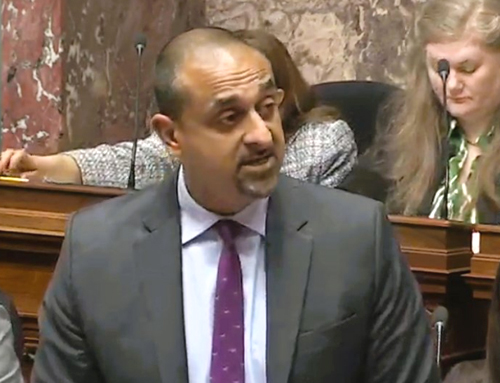
Today Jobs and Economic Grwoth Minster Ravi Kahlon said “it is critically important” to try to address the challenges of “unfair tariffs” from the United States.
“We must do three things,” said Kahlon today in a media session ahead of the day’s legislative session where he introduced a bill that will remove interprovincial trade barriers. BC needs to:
- track investment to British Columbia and to Canada;
- reach across the world and shake hands and build relationships with partners overseas; and
- remove inter-provincial trade barriers to ensure that we can have good s being sold throughout Canada so that we can leverage that opportunity.
The bill is intended to ensure that goods and services can move through BC and across Canada in a more efficient way that saves time and money for businesses as well as reducing product prices for consumers.

Interprovincial trade challenges:
Kahlon says Bill 5 will enable BC to continue their work at the national table. He says the new framework will support future changes as well.
It will help address challenges around the interprovincial trade of liquor and food as well as addressing any challenges with labour mobility as people may choose to move to other provinces to continue their careers. Any BC exceptions will be posted online for full transparency.
Kahlon says he has heard from the business community about these challenges.
He calls the legislation “foundational” to unlock economic activity to help ensure success. All standards for safety and environment will be maintained, Minister Kahlon said.
“We have to allow for goods at least within Canada to move freely and allow for that competition which in the end is going to help our consumers to get a more affordable product,” said Kahlon.

Other provinces:
In November 2025, BC chaired a table of all the provinces where we brought all our stakeholders today. He noted that Manitoba is bringing in similar legislation.
“So far as the legislation goes, the hardest of part is negotiating with other provinces,” said Kahlon today. “For a long time, provinces have put up certain barriers in their jurisdiction. Having a fresh lens put on them to look and see whether they still make sense todayhas been a bit of a challenge.,” said Kahlon, adding that the discussion on interprovincial trade barriers has been going on for 30 or 40 years.
Sending products out of BC or received into BC from other provinces can take place without additional cost or paperwork, Kahlon outlined to media today.
Removing trade barriers will be welcome by the business community that has many times found it easier to send to buyers in other countries compared to the challenges of selling to purchasers in other provinces in Canada. Reduced costs and faster access to markets is “what’s required in this time we living in”.
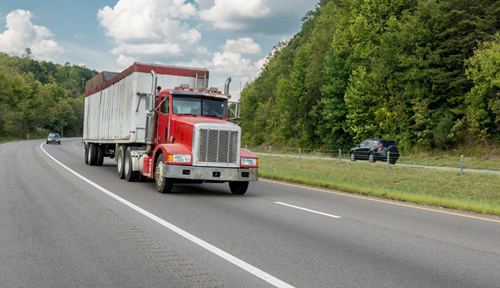
“If we can’t get an agreement with all the provinces we’ll go with the ones who are willing,” Kahlon told media today. He added that provinces who claim to be ‘pro business’ put up the most barriers.
This helps facilitate the Look West Strategy to boost BC’s economy.
Premier David Eby promoted interprovincial trade with the other premiers at various meetings in 2025 and recently in Ottawa last month. There was a communique from all the premiers to their ministers that this agreement has to be in place this year. BC hopes all the provinces will post their exceptions publicly so businesses understand what the rules are.
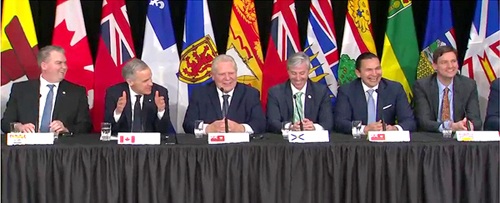
“We as a collective across the country have been able to remove trade barriers for goods and services within one year. So it shows you that anything is possible. Everybody is committed to working together. We have more work to do and I’m excited to continue that work with my colleagues across the country,” said Jobs and Economic Growth Minister Kahlon today.

CUSMA negotiation phase:
Kahlon said that provinces are also discussing their contributions to the federal negotiating mandate regarding CUSMA, toward a meeting coming up in March of all the provincial ministers meeting with federal Minister of Internal Trade Dominic LeBlanc.
Top of that list will be “unfair tariffs on our forest products”, said Kahlon today.
BC crown corporations are required to shift to ‘buy Canadian’, and that is underway, said Kahlon today. The response in the past year to buy Canadian “has had the desired effect”, but that drive is now in a new phase as the CUSMA negotiations get underway.

Exports are shifting:
There is an increase in trade to non-US partners, said Kahlon. He mentioned Vietnam and India in that regard. Non-US trade partners want to invest in BC.
Liberating service delivery:
A lot of services face undue burdens when trying to deliver them in other provinces, says Kahlon.

Labour mobility:
People with trades training and health care skills. Many of them don’t move between provinces because their skill set or certification they have in one jurisdiction doesn’t allow them to work in another province.
“It’s important that we have — at a high level — standards that ensure safety for the public and making sure that everyone has a skill that they need to do the work. But once that bar is set they should be able to move with their skill set to other provinces if they feel an opportunity is there,” said Kahlon in today’s session with media.
BC has a need for trades people and professionals in health care where benefits could be seen immediately, the Minister of Jobs and Economic Growth said today.
===== RELATED:
- Reinforcing B.C.’s leadership in interprovincial trade (BC news release / February 18, 2026)
- NEWS SECTIONS: TRADE & TARIFFS | TRADE DIVERSIFICATION | 43rd BC PARLIAMENT