


Sunday February 8, 2026 | LANGFORD, BC [Posted at 2:44 pm PT | Latest update 11:04 am February 9, 2026 PT]
Parliamentary analysis by Mary P Brooke | Island Social Trends
In the way the parole system currently works, the families of serious crime victims often end up having to relive the trauma of the attack on their family member(s).
In particular, when convicted murderers or people who are convicted of sexual assault are up for parole, all the details are put forward again for the review. In most cases, the family attends such parole hearings.
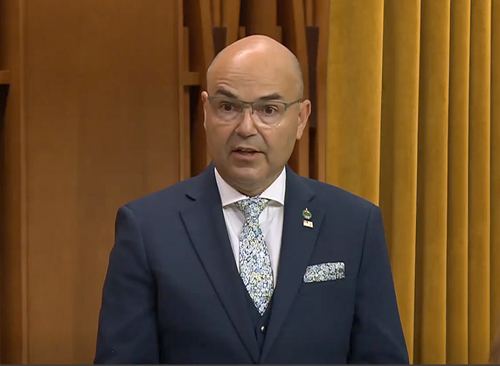
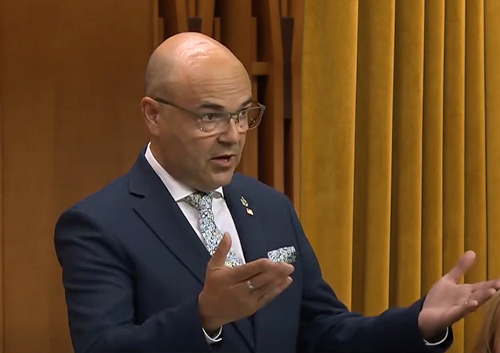
As part of serving his constituents in Cowichan-Malahat-Langford and all Canadians, Conservative Member of Parliament (MP) Jeff Kibble put forward his Private Members Bill (PMB) C-235 in Fall 2025 to propose changes to the law that might spare families the trauma of revisitng the details of the crime that was committed against a loved one.
Ahead of the current Session of the House of Commons, Kibble reviewed his Private Member’s Bill An Act Respecting Families of Murdered ad Brutalized Persons and the Kimberly Proctor case, in an exclusive interview with Island Social Trends.
Local west shore incident:
In Kibble’s riding is the history of a brutal tragic incident… the murder of Kimberly Proctor on March 18, 2010.
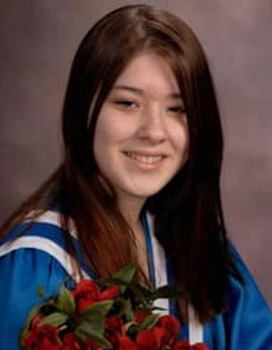
The Langford resident was just 18 years old. She went missing on a Thursday evening and her body was found the next evening just off the Galloping Goose Trail in Colwood. From the start, police called the death a homicide, given the manner of death (which was not immediately revealed).
According to CBC news coverage on March 23, 2010, at least three people in the area heard screams on the Thursday night but didn’t do anything about it — one resident saying that youth partied on the trail at night all the time.

Three months later, it was determined and revealed that Proctor had been sexually assaulted and that her body has been burned. She had been lured by two classmates to the home of one of the killers (Kruse Wellwood) in Langford where she was sexually assaulted and tortured, and her body was later burned beneath a bridge on the local Galloping Goose Trail.
The two teen boys who killed her — Kruse Hendrik Wellwood (then age 16) and Cameron Alexander Moffat (then age 17) — were charged with first degree murder, forcible confinement, sexual assault and an indignity to human remains. They pleaded guilty and were convicted. They have been serving jail time since.
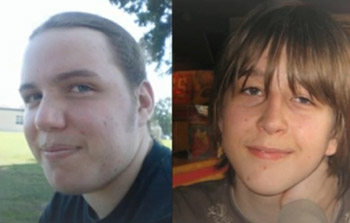
Both teens were sentenced as adults. They received life sentences in 2011 with no possibility of parole for 10 years.
Their parole eligibility came up recently.
- They both became eligible for day parole in 2018.
- Moffat was denied day parole in 2024 and denied full parole in May 2025.
- Wellwood was denied day parole in fall 2025, and denied full parole on December 10, 2025. The parole board found that Wellwood’s risk level is “not compatible with any form of release”.
Community context:
According to the Proctor family in a YouTube video, the anti-social behaviours of Wellwood and Moffatt were apparently noted by their peers and community, but nothing was done about it.
The Sooke School District (SD62) where Kimberly had been a student in her graduation year at Pacific Secondary School (an alternative school in an commercial/industrial-area building on Island Highway in Colwood) reportedly provided counselling for students who sought that support.
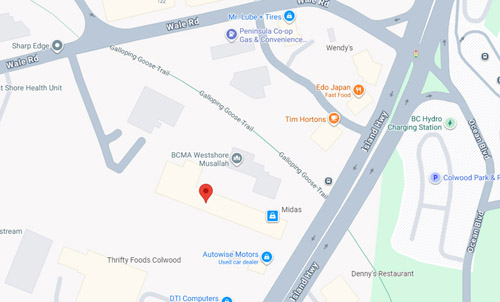
SD62 did not appear to provide any elevated attention to the incident, though the off-site educational facility was later reestablished elsewhere in Colwood with a fresh name.
Overall, the crime was horrific and had a strong impact on the local community. Perhaps it was natural for community to quietly set the whole thing aside.
The progress of this story continues to get basic media coverage (around parole, etc) but it appears to be uncomfortable for the local community and the incident is rarely talked about.
Issues related to this story are carried forward by journalists and politicians out of a sense of civic duty, including community awareness and victim support.

Petitions:
After the active phase of finding, trying, sentencing and locking up the killers, the Proctor family worked with a local lawyer and seven protocols were developed, for which a federal petition (and provincial ones) could be signed by the public.
The federal petition had four asks:
- If a young person aged 16 years or older is charged with first or second-degree murder he or she should automatically be transferred to adult court.
- If a young offender has pled guilty to first or second-degree murder, his or her name should be made public.
- If a young person is sentenced as an adult for first or second degree-murder, he or she should receive the same sentence as adults of 25 years imprisonment without parole.
- Young persons who are charged with first or second degree murder under the Criminal Code should be detained in custody separate and apart from other young persons in the same facility.
The website at KimberlysLaw.com presented seven asks:
- Threat Assessment Protocols
- Mandatory Counselling and Treatment
- Parental Responsibility (financial)
- Transfer to Adult Court (for age 16+ in cases of first or second degree murder)
- Publication of Young Offender names upon guilty pleas
- Truth in Sentencing – in cases of first and second degree murder (so as to not mislead the public when the offenders are older)
- Interim Custody
The petition was signed by 1,328 people federally, with 1,793 signatures on a provincial petition in BC.
For the family this was an unthinkable nightmare that now gets revisited when parole hearings come up.
Private Member’s Bill:
Jeff Kibble’s Private Member’s Bill C-235 aims to change the Criminal Code so that people convicted of serious crimes involving murder, sexual assault and abduction (all in one incident) are ineligible for parole for 40 years.
Currently the ineligibility for parole is 25 years which happens because only the murder charge — the crime with the longest ineligibility for parole — is sentenced.
The process for a Private Member’s Bill dealing with extended parole ineligibility was started in a previous Parliamentary Session.
Manitoba MP James Bezan (Selkirk—Interlake—Eastman) originally tabled a Bill on this issue in the 43rd Parliament. When the 2021 election was called the bill did not continue. An election call ends all bills in progress.

On September 22, 2025 Bill C-235 was introduced by Kibble and seconded by MP James Bezan who in this 45th Parliament is the vice-chair of the Standing Committee on National Defence.
A first-time MP elected in 2025, Kibble had reviewed which Bills hadn’t been dealt with in the previous session. “This one spoke to me specifically because it’s providing compassion to families and it certainly was very related to a case that happened here,” says Kibble whose federal constituency includes Langford.
As well, there was a deeply personal incident in MP Kibble’s own family. Last year his daughter’s boyfriend was murdered by a violent repeat offender who was out on bail. Kibble, his wife and daughter attended the trial and experienced a similar type of stress and trauma. He understands in a very real way the kind of emotional toll families can endure.
“I’m very passionate about ensuring that justice is served and that compassion is part of that for families,” says Kibble.

It’s about the families:
“This Private Member’s Bill speaks to compassion for families because the heart of it isn’t keeping people in jail longer,” says Kibble. “It’s about the families.”
“These are the most heinous of criminals who have abducted, raped and murdered their victims all in the same case. In Canada it’s unlikely that any of these types of offenders have ever been released,” says Kibble.
Assigning 40 years without parole:
“But what it does do, is give judges the option (or as recommended by juries) to increase the ineligibility for parole up to 40 years. The reason that’s compassionate is that then families don’t have to keep going to parole hearings where they know that these heinous criminals get off on recounting the horrific details,” says Kibble.
“The families don’t have to go (to parole hearings),” Kibble says he was reminded by someone. But Kibble provides context: “They feel compelled to go to give a voice to their loved ones that no longer have a voice. They go because they don’t want to see these criminals coming back out,” he told Island Social Trends.
“So they are driven to go. And then they have to listen to these details,” said Kibble last month.
“If someone is given the minimum of 25 years and then they’re eligible for parole at 23 years, by the time a case has gone through the courts it could be already 10 or 12 years. Families are having to go every two years sometimes to parole hearings and going through this process. And there’s a long lead up to it. They receive notice, and it causes incredible stresses on families because they know what’s going to be happening. They prepare for it, and they’re briefed on it, and they go to the parole hearings. They have to be face-to-face and hear these horrible stories recounted through that process again,” says Kibble.
“So families are getting retraumatized over and over every two years.The judges are given this discretion to 40 years,” says MP Kibble.

Getting it through the parliamentary process:
“It’s a long process,” says Kibble, as to getting a private member’s bill introduced, discussed in committee and ultimately to a vote for passage.
Bill C-235 was introduced in the House by Kibble on September 22, 2025. Then in November, he debated it for the first hour of Bill-235 debate in the House of Commons.
On November 28, 2025 there was Second Reading of the Bill. Here are the points made by representatives of the major three parties:
Conservative
- Protects families from re-traumatization: The bill aims to protect families of victims from the agony and re-traumatization of frequent parole hearings, which sadistic murderers often use to toy with families.
- Increases judicial discretion for parole ineligibility: Bill C-235 empowers judges to increase parole ineligibility from 25 to up to 40 years for first-degree murder involving abduction and sexual assault, maintaining judicial discretion and Charter compliance.
- Targets the worst offenders: The bill targets the most depraved criminals, who are unlikely to ever receive parole, thereby sparing families unnecessary hearings without altering the ultimate incarceration of the offender and encouraging full prosecution.
Bloc
- Bill is unconstitutional: The Bloc opposes the bill, deeming it unrealistic and unconstitutional, particularly in light of the Supreme Court’s Bissonnette decision regarding Section 12 of the Charter and human dignity.
- Proposes alternative support for victims: The party acknowledges the intent to spare victims’ families trauma but suggests written or pre-recorded video testimony at parole hearings as a more realistic solution than extending ineligibility.
- Lacks constitutional solutions: The Bloc notes the bill’s sponsor has not proposed invoking the notwithstanding clause or amending the Charter, which would be necessary to make such an unconstitutional bill valid and enforceable.
Liberal
- Supports bill’s intent to protect victims: The party supports the bill’s intention to address victim suffering and offer stability by reducing the frequency of parole hearings for severe crimes.
- Raises constitutional concerns: The party emphasizes balancing victim protection with the Charter, noting that a 40-year ineligibility period risks being struck down as cruel and unusual punishment, citing the Bissonnette decision.
- Proposes key amendments: To ensure the bill is constitutional and effective, the party proposes three amendments: a right of appeal, a requirement for judges to provide grounds for sentences over 25 years, and prospective application.
During the November 28 debate, Kibble said that his bill was modelled after Bill C-48, now the Protecting Canadians by Ending Sentence Discounts for Multiple Murders Act, which also afforded judges the ability to extend the parole ineligibility period for multiple murder convictions. Rather than being concurrent, sentences are now served consecutively. Bill C-48 has stood up to a charter challenge. “As such, my bill is in compliance with section 12 of the Charter of Rights,” said Kibble in the House.

In February or March of this year the second hour of debate will take place. Kibble says he has “received indication from the Liberals that they’re going to be collaborative and send it to committee for work in committee”.
“The Liberals have said that through debate they’ve suggested they like the bill but they would like to see some consideration for some minor amendments. But otherwise, are essentially saying ‘absolutely, let’s get it to committee and make some tweaks’.”
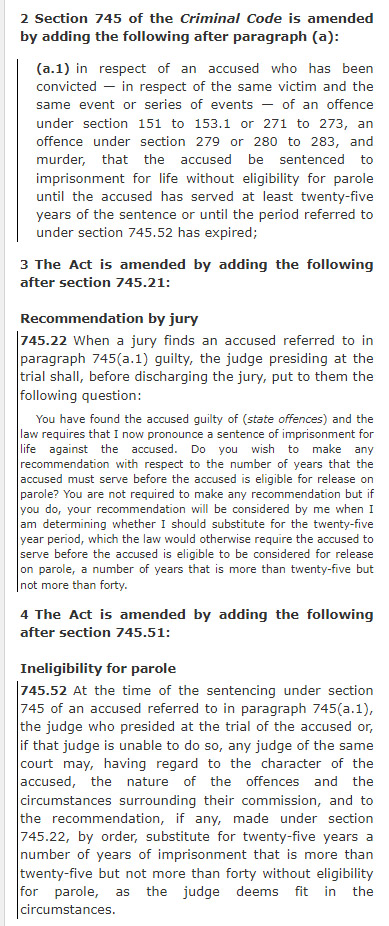
“One of the suggested amendments through debate is for judges to include a written description beyond what they normally do, to justify the 40 years of ineligibility for parole,” says Kibble, MP.
The legislation would amend section 745 of the Criminal Code so that judges, when sentencing cases like this, have to say why they went above the normal 25 years to 40. “That’s a very reasonable request,” says Kibble.
Justice and Human Rights Committee:
The Justice and Human Rights Committee is the place to explore that. They would bring in an expert judge to provide an opinion, Kibble explains, adding that the committee would reflect on it and put forward a solution.
The Standing Committee on Justice and Human Rights studies the bills, policies, programs and spending of the Department of Justice and the six federal agencies related to its portfolio.
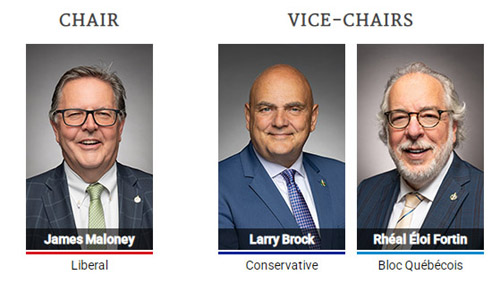
The Justice and Human Rights committee is presently chaired by James Maloney (Liberal); Vice-Chairs are Larry Brock (Conservative) and Rhéal Éloi Fortin (Bloc). The other committee members are Wade Chang, Anju Dhillon, Anthony Housefather and Patricia Lattanzio (Liberal); and Roman Baber, Amarjeet Gill and Andrew Lawton (Conservative).
Kibble highlights what he calls the degree of collaboration in the committee process around subjects like this.
“Private Member’s Bills are a good example of when we often put our heads together to try to come up with a solution. So I was happy to hear that. So we’re expecting after the second hour of debate, to recommend a vote to go to committee. From there it will go back to the House where a vote will decide if it goes to the Senate where hopefully it will be passed into law,” says the first-term MP.
Kibble himself sits on the House of Commons Defence committee. In the case of his own Private Member’s Bill he would be a presenter of Bill C-235 to the Justice committee.
Kibble’s initiative with local support:
“This is something I chose on my own to do,” Kibble said last month before the start of the parliamentary session on January 26.
As well, Kibble he has met with the Proctor family and has talked about it with them.
“They’re very supportive of it,” he says, adding that he has support across his Cowichan-Malahat-Langford riding. “They are well aware of this Private Member’s Bill and support the concept.”

Benefit to families:
“If this passes and becomes law, the benefit to victim families of these these heinous crimes. The type of people this applies to would include Pickton, Bernardo. In the Proctor case the two perpetrators were tried as adults. “These types of criminals — we know that they’re not going to get out of jail,” says Kibble.
(Of note, serial killer Robert Pickton died in May 2024 following ‘a major assault’ in jail. Paul Bernardo was relocated from maximum-security to a medium-security penitentiary in May 2023, which generated some expression of surprise in public opinion.)
“I don’t want to stir up things. I want to provide some relief and compassion to families so they don’t have to go over and over and over to this,” says Kibble.
“I’m passionate that this Bill will really help families that are dealing with this.”
“I’ve had the opportunity to talk to the Proctor family about the challenges and the stress and the devastation they have to deal with as they prepare and then after a parole hearing.”
“Just being at a trial is very heavy and moving,” he notes.

Why 40 years:
Often prosecutors will prosecute in these types of cases just the murder because it has the biggest punishment, Kibble explains.
“So those other crimes aren’t prosecuted. But in this case, if it (Bill C-235) becomes law, they know if then they also prosecute the sexual assault and abduction then the judge will have that discretion,” says Kibble. “So there’ll be a full prosecution of all of those. The changes that the Private Member’s Bill would bring would encourage them in these types of cases. Right now they don’t even bother with those.”
“The changes that the Private Member’s Bill would bring would encourage them to prosecute all three in order for the judge to be able to consider 40 years of parole ineligibility. In order to consider that (length of sentence) they have to be guilty of abduction, sexual assault and murder. In many cases where that occurs, they’re just prosecuted under the murder because that carries the biggest penalty,” says Kibble.
“If somebody was only found guilty of two charges then this law would not apply. They would have to be found guilty of all three,” Kibble explains.
“We know these people are not ever going to let out. It’s not more cruel on them, ” say Kibble about the convicted criminals. “The change is for the families.”
Kibble uses the Bernardo case as an example where only the murder charge was used for sentencing, so after 23 years of his sentence the process kicked in for potential parole at 25 years.
“The Proctor family was just at a parole hearing and of course it was denied. In that particular case the killers were only sentenced to 10 years before parole eligibility because they were tried as adults but sentenced as minors,” says Kibble.

===== RELATED:
- Avoid revictimizing families says Conservative MP Jeff Kibble: Bill C-235 to extend parole ineligibility (September 23, 2025)
- NEWS SECTIONS: 45th PARLIAMENT of CANADA | CONSERVATIVE PARTY OF CANADA | CANADA-NATIONAL
- READER COMMENTS: Send to letters@islandsocialtrends.com