


Tuesday January 20, 2026 | PRINCE GEORGE, BC
by Mary P Brooke | Island Social Trends
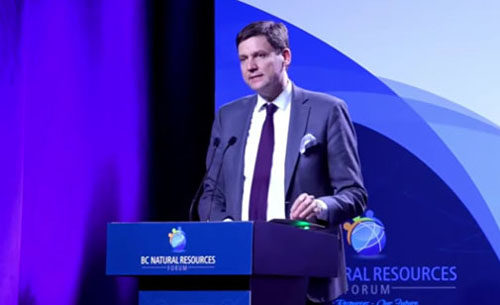
In a keynote speech at the BC Natural Resources Forum this evening, Premier David Eby highlighted the importance and urgency to develop natural resources as party of the economic backbone of BC amidst a changing world economy.
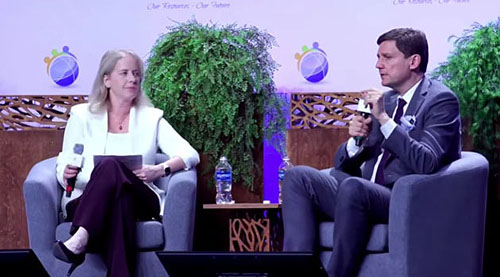
The 27-minute speech (followed by a 10-minute Q&A with the session moderator) was livestreamed from Prince George at 7:30 pm PT.
“Natural resources are, and will always be, foundational to British Columbia’s economy. They deliver the materials we need to build our homes, businesses and transportation networks, the good jobs and revenues needed for thriving communities, and the energy we need to power our society,” said Eby in a pre-event statement.
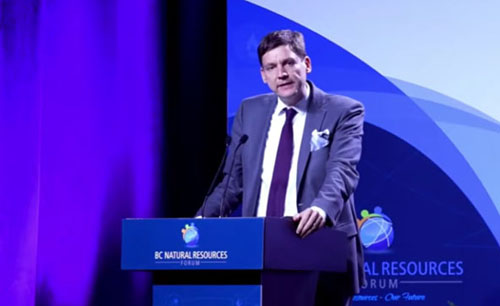
There are 19 major projects in BC, Eby stated this evening. Four of those are on the federal government’s Major National Projects list, something he brags about on BC’s behalf in most speeches and media availabilities.
Inviting feedback from the resource sector:
Tonight Eby stated that as: “Natural resource development is the key to how we will create the wealth that makes everybody better off in this province,” to which there was applause.
“I feel a huge amount of gratitude for the work that is done in this room,” said Eby, while inviting industry leaders to engage with BC ministers so as to provide feedback, on how the Province can assist them in delivering those projects.
“Do not assume that the political level is aware of the challenges you are facing. We want to hear how we can work better,” the Premier said.

Provincial revenues:
He underpinned the wealth aspect as part of paying for provincial services like educations, health care and homes that are affordable for families. “I hope we have shown int he last year how serious we are about this work,” referring to the resource sector projects.
He stated how accountability of government to the resource sector is important. “You are a very important forum for our province and for our country’s future,” said Eby.
Natural resource projects in BC are “massive investments, generational wealth, national-defining and province-defining projects”, said Eby.

Forestry sector challenges:
“Our hardest challenge and where I think we have the most work ahead is the state of our foundational — and core to our province’s identity — out forest sector, and where we’re going to go from here,” said Eby.
For context, a year ago when Eby addressed the 2025 Natural Resources Forum “tariffs were still on the horizon”. But now they are “a grim reality for the country”, said Eby.
“Here in BC the forest sector without doubt has been the hardest hit sector,” noting how punitive the softwoord lumber tariffs are. “The impacts have been devastating in many communities — mills closed, people out of work, money for communities that they use for local activities (are) drying up”.
Market diversification, supporting valued-added manufacturing and tackling some longstanding issues in the permitting sector are three key things that the province is working on, Eby outlined this evening.
“There are no quick fixes to the permit challenges we face,” said Eby, stressing that “certainty matters and reform is long overdue”. BC is now moving away from a permit-by-permit system toward an operational approach to forestry, Eby stated.

“Forest operational plans will provide years of certainty, clarity and predictability as well as protection of key community values,” said Eby.
Forest landscape plans will be developed with First Nations, industry and communities. Eby said the results are “very meaningful” when this work is done together.
Softwood sales currently face challenges of tariffs and record-prices for wood in the US and the US homebuilding economy has slowed dramatically, the premier said, leading to the conclusion that “we have to diversify our markets”.
BC will be a ‘matchmaker’ between the BC resource sector and major companies in India, said Eby (as he also mentioned during his media session from India via zoom last week).

Softwood lumber to India & China:
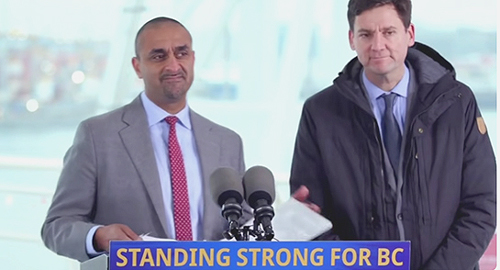
He said that on his recent trade mission to India (January 12 to 17 together with Ravi Kahlon, BC Minister of Jobs and Economic Growth) that he met more than a dozen (corporate) customers of BC lumber. He noted the economic growth in India which offers what Eby calls “a massive opportunity” for BC.
Eby said he feels that the middle class in India values “the natural connection of BC wood to the environment and values the beauty of BC wood products”. BC could reach out to educate homebuilders and furntiture builders as part of this market expansion, he said.
Smoother, faster access to the high volumes required in Indian markets is part of the BC strategy.
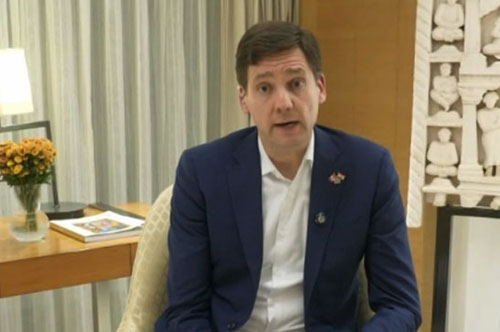
More BC lumber will also be delivered to China. Eby said that Forest Minister Ravi Parmar was in China to sign an agreement there during Prime Minister Carney’s visit last week.
Delivering a better forestry future:
“This is the work that will deliver results. It always feel too slow for the urgency of the crisis facing this sector right now. But predictable land access, permit reform, valude-added investments and new trading relationships will deliver a better forestry future,” says Eby.
“We will deliver a sustainable resilient successful wood industry for generations to come. It’s what built this province and is what will continue to build this province.”

Challenges for BC in a changing world economy:
“I have absolutely no doubt that BC resources set us up to uniquely thrive in this rapidly changing world,” said Eby this evening. “The opportunities are exceptional and unique in British Columbia.”
“BC will be the economic engine of the new economy that we are building as Canadians,” as Eby says he has declared to the prime minister and other premiers.
“Countries are racing to secure access to energy, to critical metals and minerals, in the name of both national and economic security for their people,” said Eby. He noted how clear that was for him during conversations with “giant conglomerates” in India last week who focused on mining opportunities, LNG and propane as available to develop and produce in BC.

“We don’t just build projects, we build trust,” he said.
“Global instability is reshaping markets,” said Eby, repeating a message of recent months that “there is nowhere else int he world (to face these threats) I would rather be than right here in BC. We have the talent, resource sand partnerships.”
“The goal is to have an economy that is less dependent on one market”, he said, with reference to trade diversification away from reliance on the United States.
“The window that we have now I feel like it won’t always be there,” the premier added during the Q&A session.

Trade missions:
It’s important to do trade missions to increase awareness of opportunities like mining conferences, Eby also noted.
North Coast Transmission Line:
The North Coast Transmission Line (NCTL) will turn resources into jobs in BC, said Eby.
That’s not just in the electrical utility business itself but for other sectors that will benefit by enhanced reliability and reduced supply interruption, with electrical power delivered at a predictable and affordable cost.
“It’s moving forward quickly because it’s being built with First Nations,” Eby said this evening.
Trades training applause:
Eby also got applause this evening for highlight how BC is doubling skilled trades training.
===== RELATED:
- BC’s trade mission to India focused on partnership & innovation (January 18, 2026)
- BC Natural Resources 2026 Forum at critical economic pivot point (January 14, 2026)
- Eby & Kahlon undertaking trade diversification mission to India (January 6, 2026)
- NEWS SECTIONS: MINING & CRITICAL MINERALS | TRADE DIVERSIFICATION | FORESTRY | BUDGET 2026