


Friday November 14, 2025 | TERRACE, BC [Posted at 1 pm | Updated 5:45 pm PT]
by Mary P Brooke | Island Social Trends
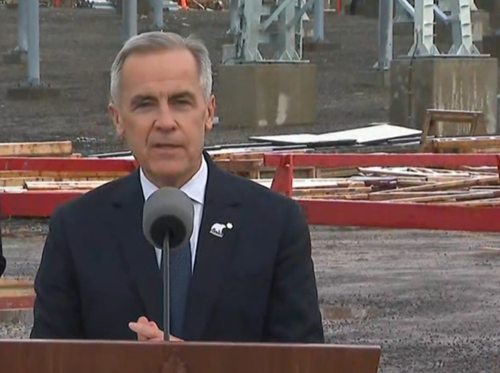
The world is changing rapidly, said Prime Minister Mark Carney, in announcing a second set of nation-building projects yesterday in Terrace, BC.
Six projects and a strategy for a seventh project were included on the list. Together with five projects announced in September, there are 11 projects now underway.
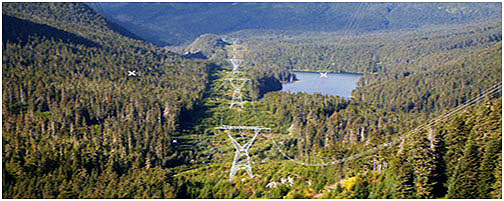
- North Coast Transmission Line (NCTL) – proponent – • BC Hydro
- Ksi Lisims LNG – proponents – • Western LNG • Nisg̱a’a Nation • Rockies LNG Partners
- Northcliff Resources’ Sisson Mine – proponent – • Northcliff Resources Ltd.
- Canada Nickel’s Crawford Project – proponent – • Canada Nickel Company
- The Iqaluit Nukkiksautiit Hydro Project – proponent – • Nunavut Nukkiksautiit Corporation
- Nouveau Monde Graphite’s Matawinie Mine – • Nouveau Monde Graphite
- The Northwest Critical Conservation Corridor – Current announced projects referred to MPO linked to this strategy: • Red Chris Mine Expansion, • North Coast Transmission Line, • Ksi Lisims LNG
The first priority of each project is that — if launched — it would be in the interests of Canada’s sovereignty and contribute to building a more sustainable economy.
Carney was accompanied by BC Liberal MP Gregor Robertson (Vancouver Fraserview—South Burnaby) who is the Minister responsible for Pacific Economic Development Canada in addition to being the Minister of Housing and Infrastructure.
The Liberal government promotes Budget 2025: Canada Strong as the government’s “bold and ambitious plan to meet this moment and transform our economy from one that is reliant on a single trade partner to one that is stronger, more self-sufficient, and resilient to global shocks”.

At the core of the new federal strategy is new nation-building infrastructure with a focus on ports, mines, trade corridors, and other major projects.
Electrification:
The projects have a high likelihood of success and much contribute to sustainable quick growth.
It’s a plan to replace uncertainty (due to reliance on the USA which is now an unreliable trading partner) with prosperity (in a way that helps all Canadians), says Carney. A productivity super deduction (in Budget 2025) allows for immediate expense write-offs of equipment to get this rolling.

Natural resources and supply chains:
The projects are intended to unlock the vast natural resources in Canada, enabling the sale of those products to new markets across the country and around the world, while securing sovereign domestic supply chains.
This is part of the Carney government’s intention to diversify trade inter-provincially as well as internationally largely in response to the sudden economic shock of no long having the United States as a reliable trading partner.
Clean electrification (hydro, solar and wind) is the only path to building a sustainable economy, said Carney.
At this year’s G7 Summit in Alberta, the government launched the Critical Minerals Production Alliance and Critical Minerals Action Plan – a Canadian-led initiative to coordinate production and catalyse global investment.

Major Projects Office:
To get nation-building projects built faster, the Prime Minister launched the Major Projects Office (MPO).
The MPO was created under the Building Canada Act, which came into force in June 2025. It was launched on August 29, 2025.
The MPO will shepherd projects through the complexities of federal and provincial and various sector regulations including helping to get approvals at all levels. Being on the MPO list will and of itself provide a confidence boost to potential private sector investors in those projects.
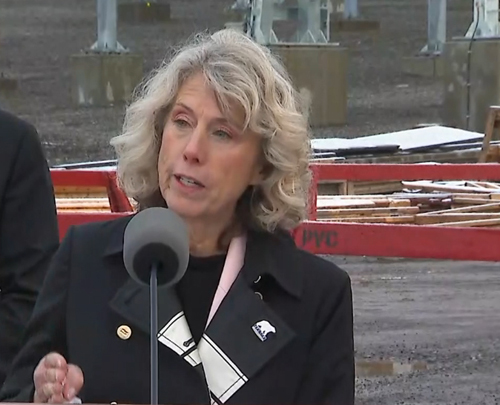
The MPO is under the leadership of Dawn Farrell, its first Chief Executive Officer, who brings extensive leadership experience in Canada’s energy and infrastructure sectors.
Being part of big national strategies will boost the potential of the chosen projects.
“You can’t cut corners but there are a lot of efficienices,” said Farrell.
Backgrounder – MPO – Second Group of Projects

Two sets:
The first and second tranches of projects represent a combined investment of more than $116 billion in our economy and will create thousands of well-paying jobs for Canadians.
First set – five projects:
In September, Canada’s new government announced the first tranche of major projects – representing $60 billion in investments in nuclear power, LNG, critical minerals, and new trade corridors.
- Phase two of LNG Canada in Kitimat, B.C., doubling its production of liquefied natural gas. [BC Premier David Eby held a hasty press conference at the LNG facility in Kitimat in July]
- The Darlington New Nuclear Project in Clarington, Ont., which will make small modular reactors. [For months, Ontario Premier Doug Ford has been promoting small nuclear as a prime example of key energy projects as a way to help with Canadian energy resilience]
- Contrecœur Terminal Container Project to expand the Port of Montreal. [Carney highlighted this project and other ports several weeks ago.]
- The McIlvenna Bay Foran Copper Mine Project in Saskatchewan. [Copper has been highlighted as a key mineral resource for months in federal economic discourse.]
- The expansion of the Red Chris Mine in northwestern B.C. [In July there was a mine rescue incident of some trapped inspectors at Red Chris Mine.]
At that time, strategies were outlined – from Atlantic energy connecting wind and new transmission to carbon capture, high-speed rail, and a sovereign cloud – to drive tens of billions in further investments, while creating the conditions for a better-connected, more productive, and ambitious country.
Second set – six projects:
Today, Prime Minister Mark Carney announced the second tranche of projects to build our economy. On their own, any one of these projects is transformational.
As part of our broader national strategies to boost Canada’s competitiveness, these initiatives will make our country more prosperous and resilient for generations to come. These strategies include:
- Realising Canada’s full potential as an energy superpower;
- Creating new trade and economic corridors to diversify our economy;
- Building our leadership in critical minerals to increase our independence; and
- Establishing our data sovereignty at a scale to serve Canadians safely and securely.
Canada must start by realising our full potential as an energy superpower. We are the fourth largest natural gas producer in the world, we possess an electricity grid that is over 80% clean, and we are among the world’s top producers of critical minerals that will power the clean economy of the future.
The projects announced today capitalise on these strengths. They will represent more than $56 billion in new investment, support 68,000 good-paying careers, and build Canada’s economic strength for generations.

Northwest Critical Conservation Corridor:
Today, the Prime Minister referred the Northwest Critical Conservation Corridor in Northwest British Columbia and the Yukon to the MPO. This Corridor sits atop vast deposits of critical minerals and has the potential to unlock world-class resources while creating a conservation area the size of Greece.
Referring this Corridor to the MPO ensures it can realise its extraordinary potential for critical minerals development and clean power transmission, while upholding Indigenous rights and supporting Indigenous project leadership.
This Corridor will fundamentally transform the lives of thousands of Canadians, position Canada as a global leader in critical minerals, and drive prosperity across the country. Realising this potential will require a coordinated effort with provincial and Indigenous partners to build transmission lines, upgrade highways, install fibre and cell towers, and invest in communities, ports, and railway lines. Infrastructure investments under this strategy also link clean electricity to Canada’s ability to export LNG. Extending transmission to the Yukon can also power the North and has the potential to unlock additional resources.
In addition to the referral of the Red Chris Mine expansion in September, two further projects in this region being referred to the MPO include:
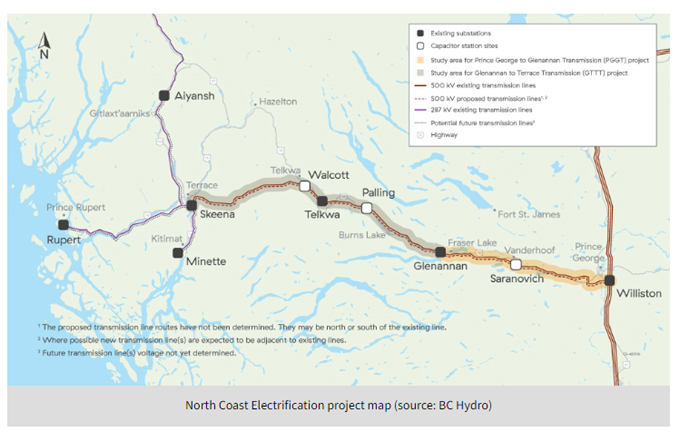
- North Coast Transmission Line (NCTL) – Northwest British Columbia: This project is a foundation for a cleaner, stronger, and better-connected Canadian economy. This project will tie the Northwest Critical Conservation Corridor together, delivering low-cost, clean electricity, and bolstered telecommunications to local communities along the West Coast. To support the early stages of the NCTL project, the Canada Infrastructure Bank (CIB) announced a loan of $139.5 million to B.C. Hydro. By twinning major transmission lines, the NCTL will enable transformative new industrial projects – including the Ksi Lisims LNG facility and critical minerals developments in the Golden Triangle – while reducing emissions by up to three million tonnes annually. This project, once operational, will create thousands of direct full-time careers, generate millions in annual public revenues, and anchor a clean-energy industrial corridor for generations to come. The proposed Yukon-B.C. Grid Connect aspect of the project will connect the Yukon’s isolated electrical grid to the Canadian grid through B.C., increasing the Yukon’s energy security and providing clean power to communities in Canada’s Northwest corridor.
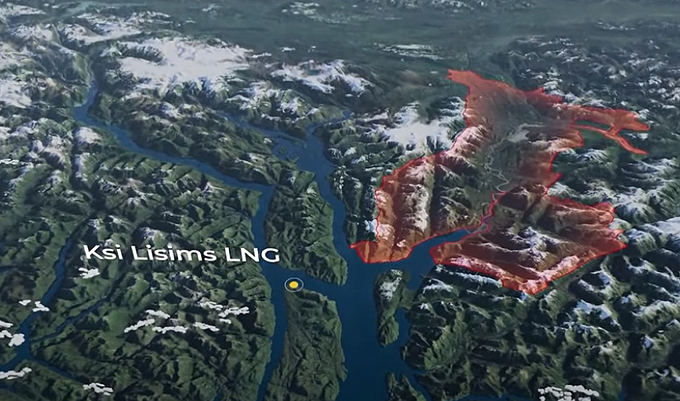
- Ksi Lisims LNG – Pearse Island, British Columbia: This project will transform Canada’s energy future. Led by the Nisga’a Nation, Ksi Lisims LNG will become Canada’s second-largest LNG facility and one of the world’s lowest-emission LNG operations once fully electrified, with emissions 94% below the global average. The project is expected to attract nearly $30 billion in investment, create thousands of skilled careers, and strengthen Canada’s position as a global LNG exporter. The project referral also includes the 800-kilometre Prince Rupert Gas Transmission Project to supply feed gas for liquefaction, and a 95-kilometre electrical transmission line to supply electricity to the facility. By ensuring that projects like LNG Canada 2 (referred to the MPO in September) and Ksi Lisims LNG get built, we can more than double Canada’s LNG production.
Critical Minerals Strategy:
Global demand for critical minerals is escalating. Earlier this month, as part of the Government of Canada’s Critical Minerals Strategy, the Minister of Energy and Natural Resources, Tim Hodgson, alongside our G7 partners, announced 26 new investments, partnerships, and other measures to unlock $6.4 billion in critical minerals projects to accelerate development and position Canada as a secure supplier of choice in the global supply chain.
To build on this momentum, there are three new critical minerals projects now being referred to the MPO:
- Canada Nickel’s Crawford Project – Timmins, Ontario: This project will serve as an anchor for Canada’s global leadership in clean industrial materials. Located in the world’s second-largest nickel reserve, the Crawford Project will produce high-quality, low-carbon nickel essential for batteries and green steel. With projected emissions 90% below the global average and the potential for a net-negative carbon footprint, it represents a model for the future of responsible mining. The project will attract $5 billion in investment and create thousands of new careers, securing Canada’s place at the forefront of the clean economy.
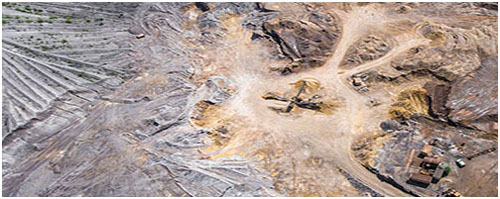
- Nouveau Monde Graphite’s Matawinie Mine – Saint‑Michel‑des‑Saints, Québec: This open-pit graphite mine will provide important inputs for defence applications and battery supply chains. It will integrate with the planned Bécancour Battery Material Plant. The project will strengthen Canadian supply resilience and help accelerate the clean transition. It will create over one thousand new careers and draw $1.8 billion in investment.
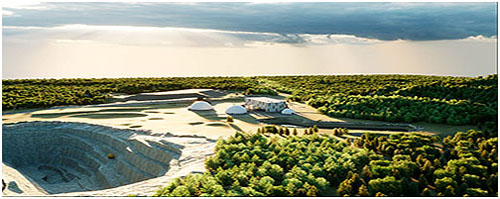
- Northcliff Resources’ Sisson Mine – Sisson Brook, New Brunswick: The Sisson Mine will produce tungsten – a critical mineral essential for high-strength steel production, defence, and industrial applications. Global tungsten markets are highly concentrated, and this project has the potential to make Canada a secure supplier for domestic and allied industries. It will position Canada as a reliable supplier of critical minerals to domestic and international partners, while creating hundreds of new careers.
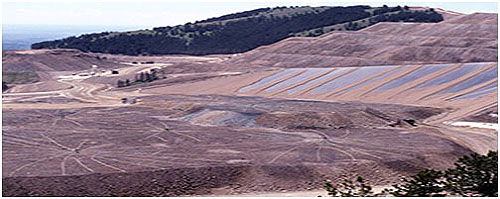
Unlocking these resources will draw in hundreds of billions of dollars in new investment and create thousands of high-paying careers for miners, carpenters, and engineers across the country – in areas like the Ring of Fire, Fosse du Labrador, and in Northern B.C. These projects across the country will also unlock partnership and equity ownership opportunities for local First Nation communities and provide a secure supply of critical minerals for Canada and our allies.

Finally, to ensure our northern communities have the clean power and infrastructure to enable economic development, we are referring the following project to the MPO:
- Iqaluit Nukkiksautiit Hydro Project – Iqaluit, Nunavut: This project is a breakthrough for Arctic sovereignty and sustainability. It will become Nunavut’s first 100% Inuit-owned hydro energy project, a milestone in Indigenous leadership and clean energy innovation. By replacing Iqaluit’s reliance on 15 million litres of imported diesel each year, this project will deliver affordable, reliable, and emissions-free power to the Arctic. It will build community resilience, fuel a cleaner northern economy, and create new construction and operation jobs.
Budget 2025:
With Budget 2025, the federal government says it is mobilising over one trillion dollars in investments over the next five years.
The first and second tranches of projects – representing more than $116 billion in investments – are intended to unlock the full potential of Canada’s economy including creating tens of thousands of new careers, from the miners, welders, and engineers who will power these projects, to the teachers, contractors, and business owners who will serve new and revitalized communities.
Through the government’s new Climate Competitiveness Strategy, there is an expansion of Clean Economy Tax Credits to make it more affordable for industries to mine critical minerals and transition to clean energy – modernizing grids, expanding renewables, increasing storage, and strengthening interprovincial power connections.

===== RELATED:
- Carney announces five major projects to fast-track Canada’s economic transition (September 11, 2025)
- NEWS SECTIONS: 45th PARLIAMENT of CANADA | BUSINESS & ECONOMY | BUDGET 2025