


Wednesday September 3, 2025 | VICTORIA, BC
by Mary P Brooke, B.Sc. | Island Social Trends
Smoky days can be expected for south and coastal British Columbia as hot weather and wildfires continue under continued drought conditions.
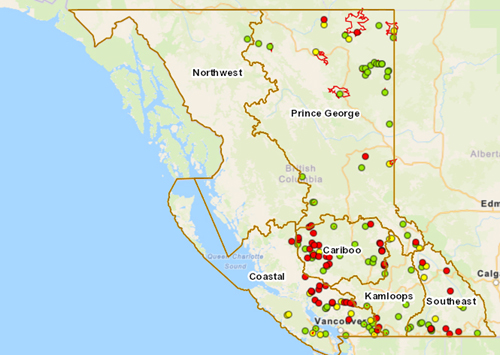
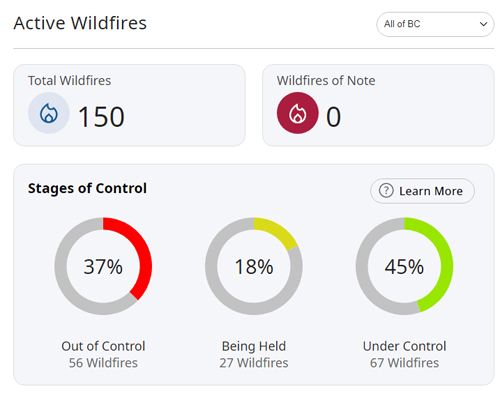
Currently there are 150 wildfires across BC (11 of which started in the last 24 hours). However, that’s down from 168 wildfires seen at the start of the Labour Day long weekend.
Of the 150 active wildfires, 45% are under control and 18% are being held.
Heat and smoke — especially in combination — can have health impacts for people, especially if they have asthma, COPD, reactive lung disease. As well, children can be more susceptible to breathing in wildfire smoke as they breathe faster and are more active outdoors.

Press conference today:
Today Forests Minister Ravi Parmar led a press conference with a wildfire update, along with Sarah Henderson, scientific director of Environmental Health Services at the BC Centre for Disease Control.
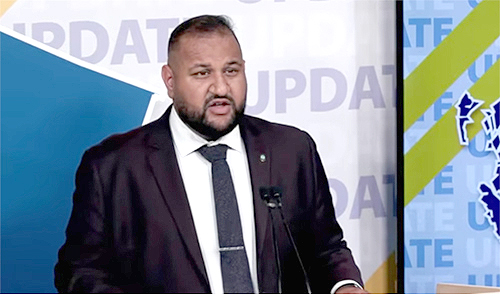
Parmar emphasized how lightning strikes continue to start wildfires and that there has been little to no rain for most of the summer. Heat continues this week and through the upcoming weekend, with some temperatures in the range of 10° above normal, said Parmar.
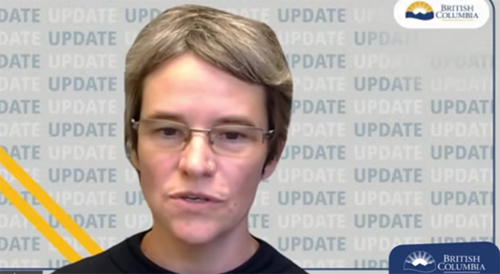
Henderson reviewed the health impacts of heat and smoke, with heat being the first consideration for people with health challenges, and then deal with smoky air scenarios.
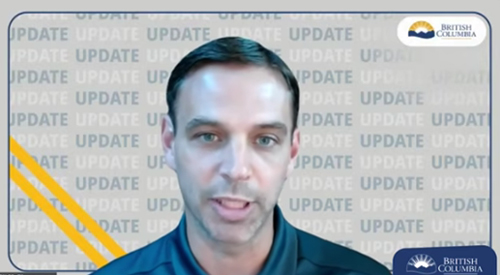
Weather as we roll into September is “more like August conditions” though with shorter days (more time for temperatures to cool overnight), said Cliff Chapman, Director, Wildfire Operations, BC Wildfire Service today.
There was a bit of rain in July and August but it wasn’t enough to change the conditions that easily lead to wildfires (whether due to lightning or human activity).
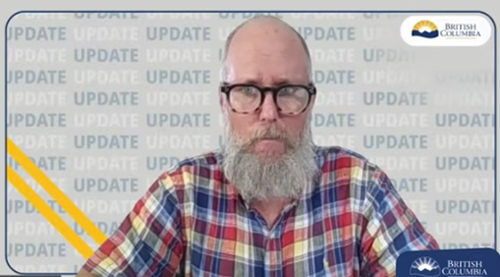
The build up of dry conditions also results in lower stream flows, said David Campbell of the River Forecast Centre.
Strategy in smoky air:
Today Henderson provided this quick strategy for managing the amount of smoky air that people might be exposed to:
- Where am I breathing right now?
- What are the opportunities to reduce smoke intake?

Heat vs smoke:
Heat is the bigger risk factor over smoke, but they both have health impacts.
First, stay cool (to avoid heat stress/stroke), then deal with smoke exposure, says Henderson.
Smoky air can lead to difficult breathing or a tight chest, but also contributes gases and fine particulate that interact with the lungs, Henderson explained.
Buildings can do better:
Henderson says that the air quality should be measured in buildings. People who come to work should not have to be exposed to undue smoke in the air. She states that both air cooling and air filtration be addressed by employers and building operators.
Households can get a basic monitor for smoke levels.
Overall, housing and commercial and industrial infrastructure will be needing to pay more attention to levels of cooling and air filtration as the climate continues to change — hotter summers that last longer into fall, dry heat that contributes to a longer if not more intense wildfire season which contributes to smoky air conditions.

===== RELATED:
- September opens with 168 active wildfires across BC (September 2, 2025)
- Labour Day weekend sees 36 wildfires active in Coastal Fire Centre (August 30, 2025)
- Smoky air is a health hazard, but heat trumps that (July 24, 2021)
- NEWS SECTIONS: WILDFIRE MANAGEMENT | SMOKY AIR